Monday
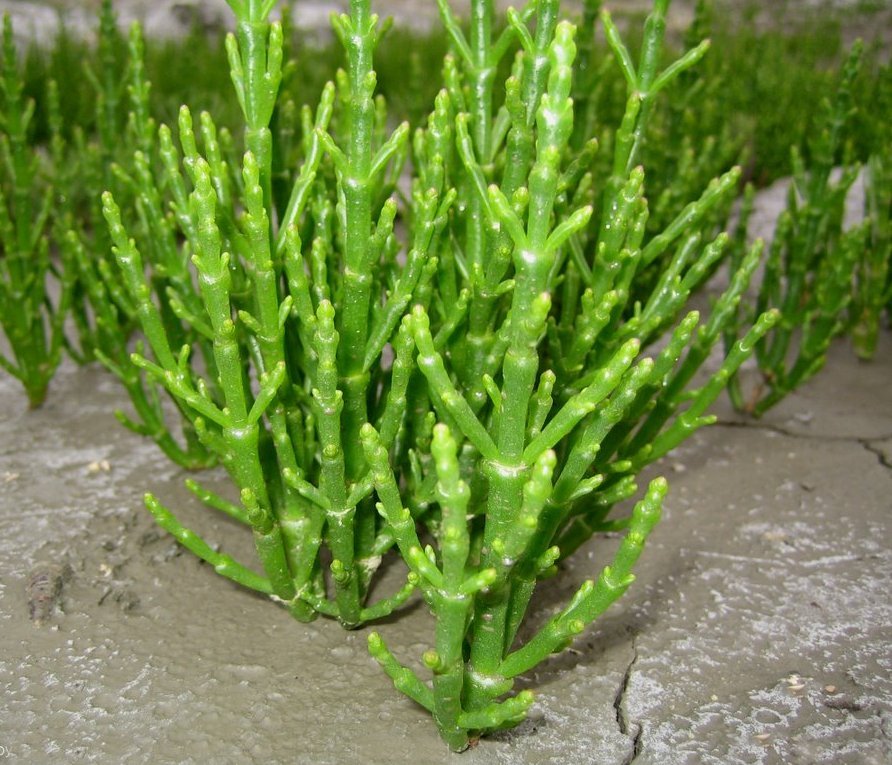
Wild Wild Vegetables: Sea Asparagus Salicornia europaea
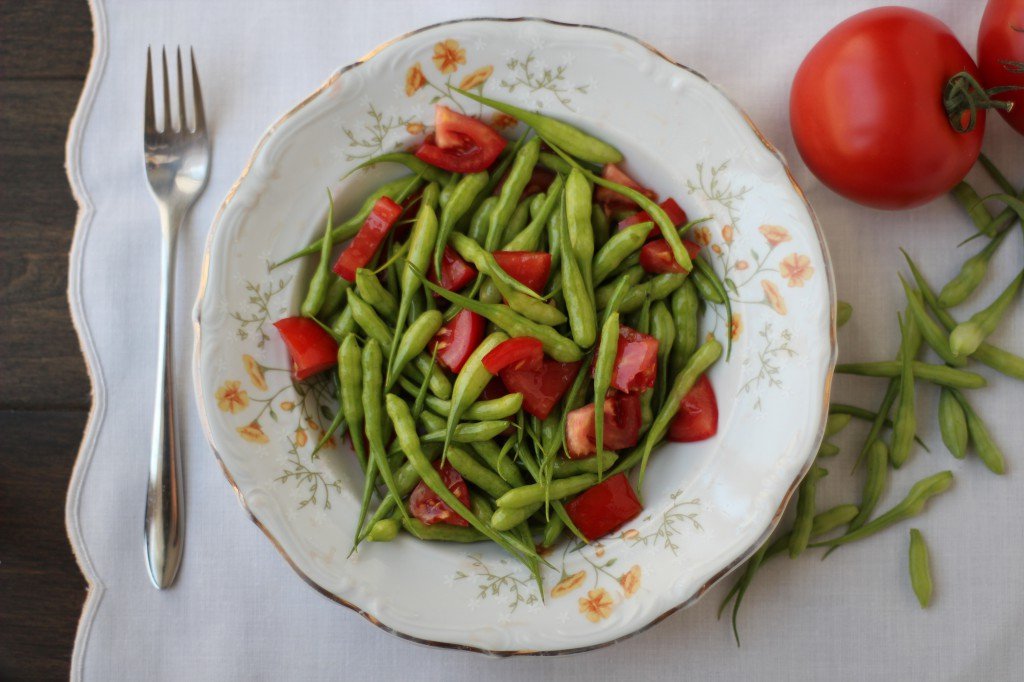
Also known as Mermaids Kiss, Glasswort, the wild marsh Samphire can be found in abundance in salt marshes and tidal mud flats on the British coast. Seeds came from salt marsh on the north Norfolk coast, England.
It can be eaten raw, or cooked - boiled or steamed for a couple of minutes, topped with melting butter and a squeeze of fresh lemon juice.
Absolutely no salt is needed as they taste of the sea so are more than sufficiently salty. They are rich in Vitamins A, C and D, this plant is highly sought after in British upscale gourmet restaurants.
Annual, in warmer climate perennial. Very high moisture needs; suitable for marsh bogs.
Info on the plant - http://en.wikipedia.org/wiki/Salicornia
Seeds (US): Marsh Samphire Salicornia europae
Plants (UK): Samphire Plant
Posted by
Garden Medusa
0
comments
Labels: exotic edibles, gourmet vegetable, Marsh Samphire, ocean vegetables, rare vegetable, Salicornia europaea, Sea Asparagus, sea Bean, Wild Vegetable
Thursday
Mini Garden Gnome Jewelry
Too cute not to post... Gnome Earrings from Lonestarbeadery
Cute cute cute. Miniature Garden Gnomes with a
shovel and Swarovski glass crystals on secure steel lever back ear
hooks. 1.5" inches (40mm) long, 3D all the way around, available also in
red and blue. $16 - Gift wrapped.
Posted by
Garden Medusa
1 comments
Labels: fairy gnomes, garden gnomes, gnome earrings, gnomes, Mini gnomes, miniature gnomes, woodland dwarfs
Monday
Broken Bones Tree Midnight Horror
The leaves are very large, 5 ft long.
The large leaf stalks wither and fall off the tree and collect near the base of the trunk, appearing to look like a pile of broken limb bones. The flowers are reddish purple outside and pale, pinkish-yellow within, numerous, in large erect racemes. The flowers bloom at night and emit a strong, stinky odor which attracts bats.
The name Midnight Horror is due to its lengthy seed pods which range from 1.3 - 4ft. Hanging off the tree in clusters, when dry they rattle in the wind like a clattering skeleton...
It has been used traditionally for a wide diversity of ailments such as cancer, diarrhea, fever, ulcer, jaundice and arthritis.
Posted by
Garden Medusa
0
comments
Labels: Broken Bones Tree, Midnight Horror, Oroxylum indicum, Tree of Damocles
Thursday
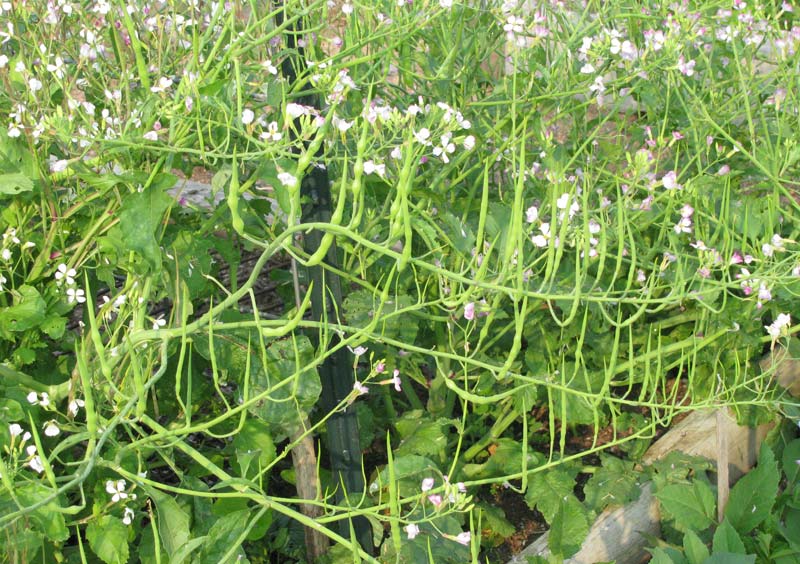
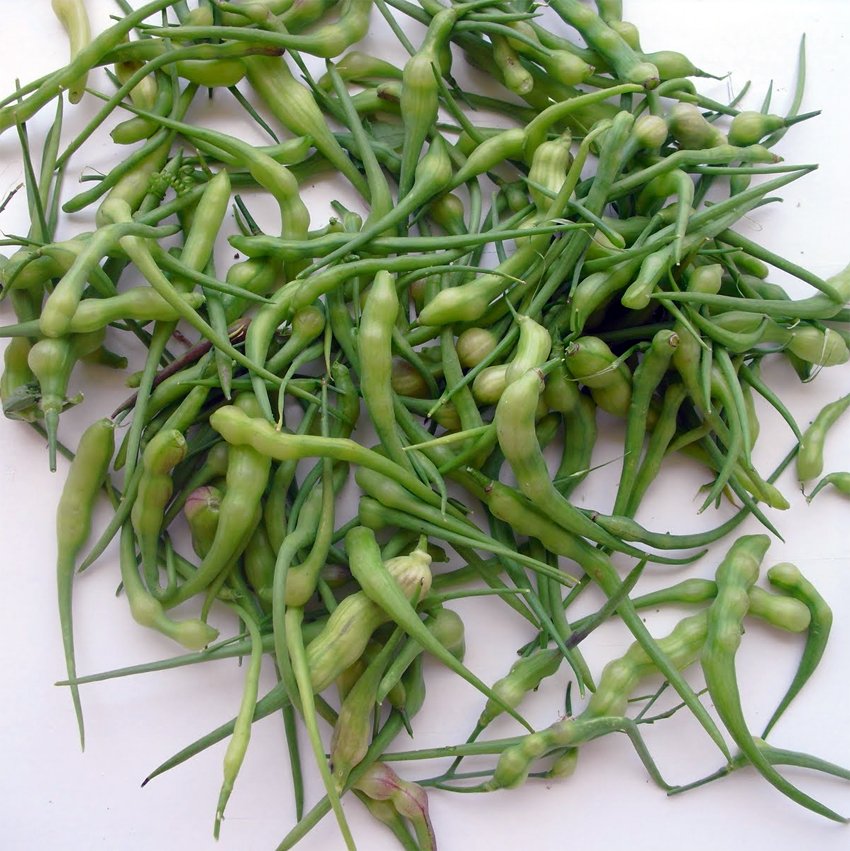
Heirloom Rats Tail Radish - Incredible

It sure sounds and looks weird but it tastes like regular radish. Great in hot climates
The aerial Rat Tail Radish came from Asia in the early 1800's. It was in vogue in the U.S. around the Civil War, but has been virtually unobtainable since.
Delicious, unusual, yet surprisingly versatile, the pods are produced by the dozen in great masses.
Pick the seedpods when they are mild, crisp and about 6 inches long. Unlike other radishes, rat-tail thrives in summer heat will bear all summer long. Eat raw, stir fried, or pickled.
Rat Tail Radish Seeds
Posted by
Garden Medusa
2
comments
Labels: aerial radish, edible pods, pod radish, radish pods, rare heirloom vegetables, rat tail radish, rat's rail radish
Red Devil's Claw Proboscidea (sp)
Proboscidea parviflora is a species of flowering
plant in the family Martyniaceae known by the common names doubleclaw
and red devil's-claw. It is native to the desert southwest of the United
States and northern Mexico, where it grows in sandy, dry, and disturbed
habitat and blooms during the hot summer. This is an annual herb growing from a taproot and producing sprawling, spreading stems.
The flower is white to pink or purple, sometimes with mottling or lines of spots in the throat, and often a purple blotch on the upper lip.
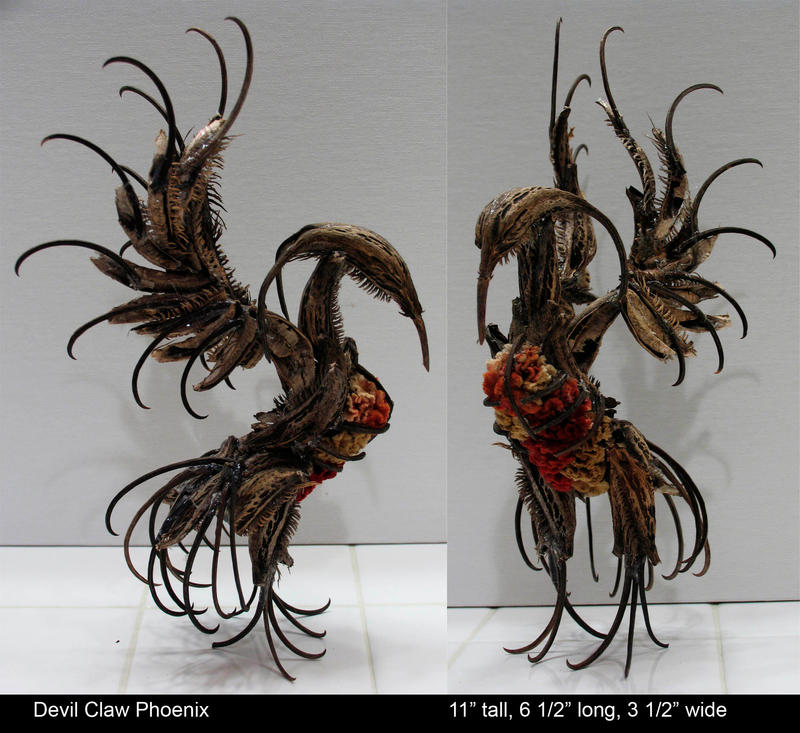
The fruit is a large seed pod are a few inches long. As the fruit dries the tail cracks open and splits into two hooked, claw-like halves. The young fruits and seeds were used for food and the dark-colored hardened dry fruits were used in basketry local Native Americans. Pods are much sought after by artists.
Seeds found here
More from this artist:
Here is an awesome set of sculptures made with Devil Claw Pods by "Art from the Heart".
http://art-fromthe-heart.deviantart.com/gallery/7318792
Posted by
Garden Medusa
2
comments
Labels: Devils Claw, Proboscidea parviflora
Friday
Chocolate Cocoa Plant Theobroma cacao
Obtained fresh pulpy seeds to grow some Chocolate Trees. These are not like typical seeds. Once they dry out, they are no longer viable.
Once known only as the drink of Kings and the rich. The Cacao Tree is a shade tolerant, moisture loving, understory rainforest tree. It naturally favors riparian zones so often in the wild is found along rivers. The trees live for up to 100 years, but cultivated trees are considered economically productive for only about 60 years.
Unlike most fruit that grows on the branches, cacao pods grow directly on the trunk of the tree. The cacao tree yields its first crop at 3-4 years old. They give fruit three to four times a year. The hard, coarse shell changes from green to yellow, and then to a reddish brown.
The cacao tree can flourish only in the hottest regions of the world, but the young plants in particular need lots of shade. Delicate seedlings are easily sunburned, and so they must have direct cover from larger trees in the rainforest canopy. The cocoa trees develops under the shade of other large tropical forest trees. In farms they may be under or banana or coconut trees. They need 80+ inches of rain, and high humidity. Zone 10 or Greenhouse/Indoors.
Posted by
Garden Medusa
0
comments
Labels: cacao, cacao seeds, chocolate plant, chocolate seeds, chocolate tree, cocoa, cocoa seeds, fresh cocoa seeds, schokoladen baum samen, Theobroma cacao, Theobroma cacao seeds, tropical fruit tree
Monday
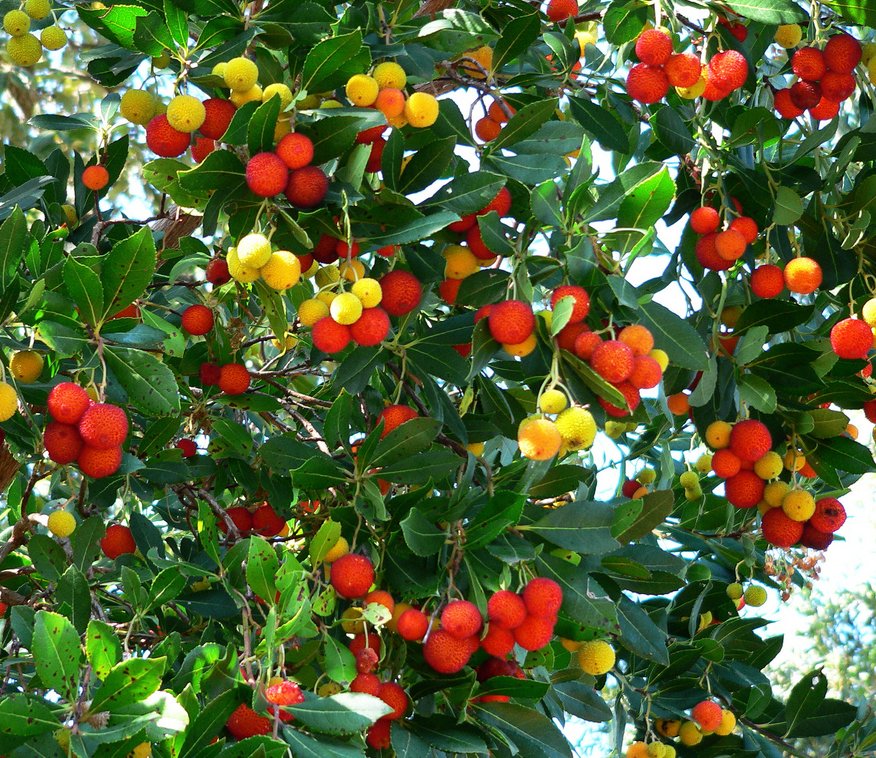
The Killarney Strawberry Tree
The strawberry tree is native to Ireland, southern Europe and the western Mediterranean region (Turkey, Greece, Lebanon) where it grows in rocky, well-drained soils.
The small white or pinkish blueberry-like flowers are assembled in drooping panicles about 2" (5cm) long. The spherical bright red fruits are warty and about 3/4" (2cm) in diameter. They take a year to ripen, and both flowers and fruits can be present at the same time.
Strawberry tree is 8 to 20+ ft (2.5m to 6m+) tall and wide. Full sun or partial shade (essential in desert areas). Makes a striking display as a specimen shrub. Great for Bonsai.
The bark of strawberry tree has been used in tanning leather. The fruit is edible. The fruits are prepared as jams, jellies, syrups, candied fruit, distilled and fermented drinks, such as wines (Medronho) and liqueurs. Produces a rare, highly-esteemed honey in Sardinia.
Strawberry tree is tolerant of acidic to alkaline soils. Zones 8-11. Seeds found here
It's a challenge. Very finicky to grow, but well worth it!
Posted by
Garden Medusa
0
comments
Labels: Arbutus Unedo, cane apple, Irish strawberry tree, Killarney strawberry tree, Medronho, strawberry tree
Friday
Goblin Garden - The Mighty Alraun
It's one of the oldest and most famous plant in witchcraft, rituals and medicinal use. It's also mentioned in several references in the bible. According to the legend, a dog had to pull up the man-like roots as their scream reputedly killed all who heard it! Today the plant is best known from the movie "Harry Potter".
This plant belongs to the nightshades family (Solanaceae) and all parts are poison.
Mandrakes are stemless, perennial herbs with dark
green leaves, resembling somewhat the leaves of chard and a have large
taproots that can grow up to two feet in length, resembling somewhat a
human. The pale to vibrant bluish purple flowers emerge in a cluster from the center of the plant. The fruit, orange to red berries, resembling tomatoes, ripen by late summer. The fruit is highly fragrant, one ripe fruit placed in the middle of the room will perfume the whole room with a pineapple like scent.
This plant is hardy to at least 20F when fully grown, it can be grown anywhere in the sub-tropics as long as there are cool winters there. It requires good drainage for best growth and is not too picky about soil types.
This plant gets dormant in the summer times. Every autumn the root grows a new rosette of leaves. The leaves grow fast and in only a month they are fully developed. Zone 7. Seeds available here
Posted by
Garden Medusa
0
comments
Labels: alraune, Atropa Mandragora officinarum, man plant, Mandrake, Root, seeds
Scarce Gem - Extremely Rare Sorcerer's Tree
What have we here.
The Sorcerer's Tree (Solanaceae family) is a showy woody shrub, to 12ft high, native to a small area in southern Chile.
It has slightly glossy, elliptic leaves on spiny stems and pendulous, beautiful bell-shaped, 2in long, magenta flowers followed by round, yellow-ish fruits.
Latua pubiflora is apparently nowhere abundant, and there are even very few specimens of it in the world.
Seeds found here...
The Sorcerer's Tree as it is known, is one of the rarest of all shamanic plants.
All parts are strongly poisonous due to hallucinogen alkaloids.
For any rich, moist, well drained soil in a shady spot throughout the year.
Hardy to Zone 9. The plant does not tolerate snow, but can tolerate occasional freezing spells of about 23F (the typical morning frost of central Chile). Prefers to grow in the part-shade to full shade.
Family: Solanaceae. Synonyms: Lycioplesium pubiflorum, Latua venenata, Latua venenosa, Baum der Zauberer, Palo de Bruja, Tree of Wizards.
Posted by
Garden Medusa
0
comments
Labels: Baum der Zauberer, Latua venenata, Latua venenosa, Lycioplesium pubiflorum, Palo de Bruja, rare flowers, scarce plant, Sorcerer's Tree, Tree of Wizards
Wednesday
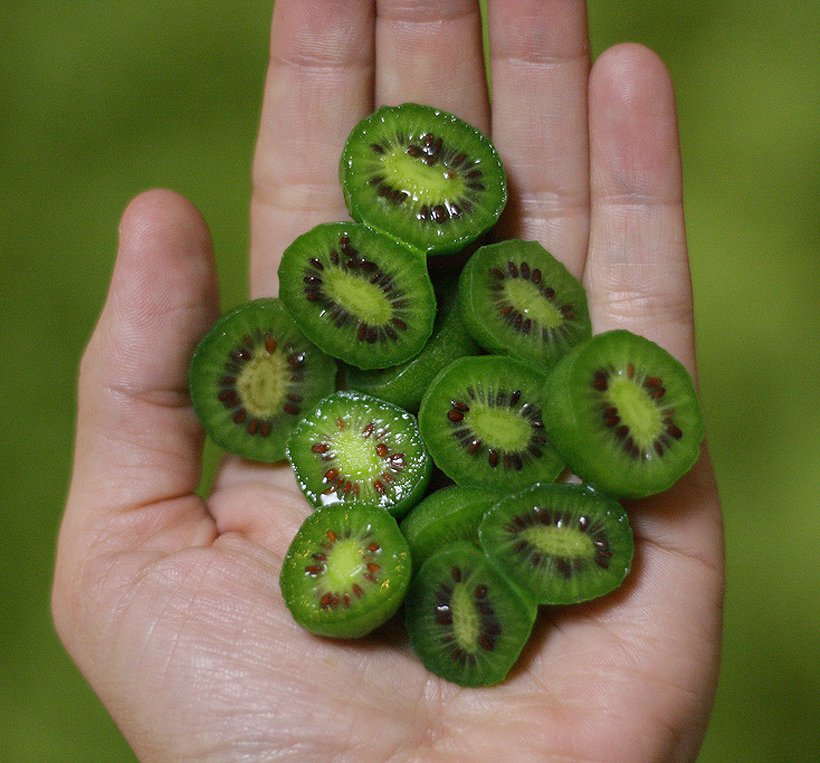
Mini Fruit Kiwi Berry Yum!!!
The self-pollinating Actinidia arguta is a heirloom perennial vine
native to Japan, Korea, Northern China, and Russian Siberia. The fruit
are referred to as Hardy kiwifruit, kiwi berry, arctic kiwi, baby kiwi,
dessert kiwi, grape kiwi, northern kiwi, or cocktail kiwi and are
edible. Berry or grape-sized fruit similar to kiwifruit in taste and
appearance, but are green with smooth skin. Often sweeter than the
kiwifruit, hardy kiwifruit can be eaten whole and need not be peeled.
The fast-growing, climbing vine is very hardy (hence the name hardy
kiwi), and is capable of surviving slow temperature drops to -30°F, although young shoots can be vulnerable to frost in the spring.
The vines need a frost-free growing season of about 150 days, but are
not damaged by late freezes, provided that temperature changes are
sufficiently gradual to allow plants to acclimate. Indeed, a period of
winter chill is necessary for successful cultivation. However, rapid
freezes will kill off buds and split vines. The vines can also be grown
in low-chill areas. Seed available here.
The vines grow extremely quickly and require a strong trellis for support.
Posted by
Garden Medusa
1 comments
Labels: arctic kiwi, baby kiwi, cocktail kiwi seeds, dessert kiwi, grape kiwi, Hardy kiwifruit, heirloom, heirloom fruit, kiwi berry seeds, miniature fruit, northern kiwi, power fruit, self-pollinating, unusual fruit
Monday
Carnivorous Spoon Sundew
Species of the Drosera spatulata group are found from New Zealand, Tasmania, and Australia.
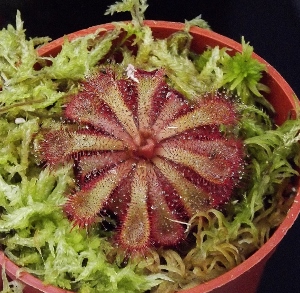
Drosera tokaiensis is beautiful, small rosette-forming carnivorous plant
species having spoon-like leaves up to 1 inch long. It is one of the
easiest carnivorous plants to grow and care. As a natural hybrid between
D. spatulata and D. rotundifolia it has the best genes for adaptation
to new environments. It is a free-flowering and fascinating house plant
that may bloom after short 8 months after sowing. The plant lives 3
years or more, producing seedlings during the way!
The leaves are densely covered with stalked tentacles that secrete
sticky mucilage with enzymes to attract and catch inserts. The tentacles
are very sensitive and mobile. Once an insect is trapped on a leaf, its
movements contact triggers a curling reaction. The leaf wraps around
the insect and produces more digestive glands in contact with its prey,
eventually digesting and absorbing the victim's nutrients until only the
external skeleton remains.
This is a subtropical species, suitable zone 10+ or as a houseplant. Seeds found....
Posted by
Garden Medusa
0
comments
Labels: Drosera, Drosera seeds, fly trap seeds, flytrap
Thursday
Beautiful Chilean Potato Vine 'Glasnevin'
Solanum crispum is a species of flowering plant in the Solanaceae family, native to Chile and Peru. Common names include Chilean potato vine, Chilean nightshade, Chilean potato tree and potato vine. Growing to 20 ft tall, it is a semi-evergreen, woody-stemmed climbing plant. The small blue fragrant flowers, 1” in diameter, with prominent yellow ovaries, appear in clusters in summer. They resemble those of the closely related potato.
S. crispum is fast growing with a long flowering period, typically from midsummer till autumn. It grows well in neutral or slightly alkaline soils that are moist and well drained. Requiring some protection from frost, planting it against a south- or west-facing fence or wall in full sun is recommended. Zone 8+
Seeds available here
Posted by
Garden Medusa
0
comments
Labels: Chilean nightshade, Chilean potato tree, Chilean Potato Vine, Glasnevin, potato vine, Solanum crispum
What a stinking Lily!! - Voodoo Lily
If you like the smell of death and decay in the garden, this one might be of interest to you. The little sister of the giant corpse flower.
The Voodoo lily is a member of the philodendron family
that grows from a tuber. Each tuber produces a single tripartite leaf
on a tall, mottled stem. Voodoo lily is a perennial generally grown as a
curiosity for its interesting foliage.
But be aware; When in bloom it produces an odor like a dead animal, the
smell intended to attract the carrion flies that are its natural
pollinators. If this is objectionable the flower can be cut off or
covered with a plastic bag to confine the smell. Pollinated flowers will
be followed by a round berry.
As a tender plant, the leaf is very frost sensitive (although buried
tubers are supposedly hardy to zone 6), and must be grown indoors as a
house plant (oh joy!) or as a seasonal outdoor plant. It is easy to plant the
tubers outdoors once the soil has warmed and dig them again in the fall
once the weather cools. Also known as konjak, konjaku, konnyaku potato,
devil's tongue, voodoo lily, snake palm, or elephant yam.
This variety is grown for food. The corm has dietary and medicinal uses and provides several vitamins, but must be used only after careful research.
Definitely worth growing for it's unique display and 'fragrant' experience, a true conversation plant.
Bulbs available here
.
Posted by
Garden Medusa
0
comments
Labels: amorphophallus titanum, arum, corpse flower, devil's tongue, elephant yam. amorphophallus konjac, konjak, konjaku, konnyaku potato, snake palm, snake palm.amorphophallus rivieri, snake's tongue, voodoo lily
Dr. Seuss Trees - Tree Echium
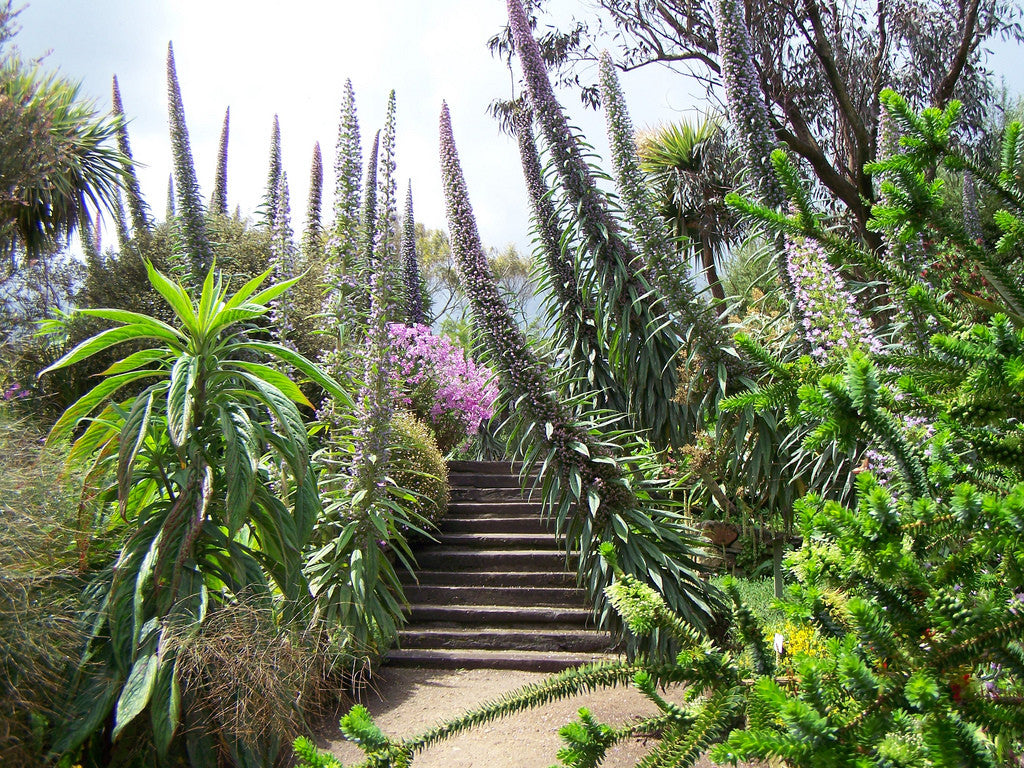
Echium pininana, also called Tree Echium and Giant
Viper's bugloss, is a plant, native to La Palma in the Canary Islands. E. pininana is a biennial or triennial, showing little more than leaf in the first year, but subsequently produces a dense, 10-12 ft high (potentially) flower spike that carries a dense mass of leaves and small blue flowers. Attracts many Hummingbirds, Bees, Butterflies.
The tree echium is a showy plant, that will withstand negative temperatures down to 26°F - 25°F (-3°C to -4°C) - zone 8+
Inflorescence of the tree echium appears in the beginning of the second spring. Resembling a Palm tree, the stem quickly reaches up to 10-12 ft tall, and bears numerous tiny blue-violet flowers.
Certainly the most sought-after of all Echium species that will bring crowds flocking to see it. Stunning!
Seeds...
Posted by
Garden Medusa
0
comments
Labels: Canary island flora, Dr Seuss Tree, Echium pininana, Giant Viper's bugloss, pride of barbados, Tower of Jewels, Tree Echium
American Ginseng Panax quinquefolius
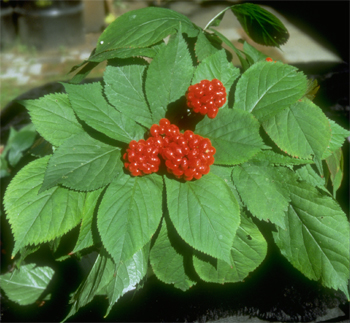
American ginseng (Xi Yang Shen), Panax quinquefolius. The word "panax" comes from the Greek word "pan" meaning "all", and the Greek "akos" meaning "cure", or "cure all", which exemplifies the high regard for this herb. Ginseng plants have glossy green leaves and grow to about 2 feet tall and wide.
They have a thin, single stem that emerges from the top of the root that shrinks each year as the plant grows. This causes wrinkles or rings at the top, or neck, of the root and is the most accurate way to date the age of a ginseng root after harvest. In most climates seedlings are best grown in a deep pot in a greenhouse or cold frame for the first winter, then can be planted in a permanent location in late summer. The plant is perennial and hardy to USDA zone 6. Prefers moist humus rich soil in semi shade to full shade.
Pre-chilled, already stratified Seeds
Posted by
Garden Medusa
0
comments
Labels: american ginseng, asian ginseng, Ginseng, ginseng seeds, herbal medicine, panax, panax ginseng, Panax quinquefolius, Xi Yang Shen
Wednesday
The Dove Tree, also called Handkerchief Tree or Ghost Tree
Native to China, handkerchief tree is considered to be the Holy Grail of exotic flora, and seeds were first sent to England by the legendary botanist Ernest Wilson in 1901. The dove tree is a deciduous tree that typically grows 20-40’ tall with a broad pyramidal habit. Red-anthered flowers in rounded clusters bloom in April-May. However the showy parts of the bloom are the large showy white bracts (one 3-4 inches long and the other 6-7 inches long) which subtend each flower cluster. The bracts flutter in the slightest breeze, and, from a distance, purportedly look like white doves sitting in the tree, hence the common name. Flowers are followed by round, greenish-brown, golf ball-sized fruits on 2-3” stems.
The bright green leaves (3-6” long) are heart-shaped at the base. Variable fall color ranges from undistinguished dull pastels to bright oranges and reds. Other common names, all in reference to the unique flowers, include handkerchief tree, laundry tree and ghost tree. Genus honors Abbe Armand David, a French missionary to China from 1862-1873, who first described and collected the tree. This Tree is hardy Zone 5-8
Posted by
Garden Medusa
2
comments
Labels: Davidia involucrata, Davidia seeds, dove tree, hankerchief tree
Dark Purple Cauliflower..Yum!
This specialty market variety will certainly attract attention at your garden and kitchen.This rare and stunning hybrid F1 cauliflower produces rich colored heads for cropping July-October. The unique purple curds can be eaten raw, boiled, steamed or stir-fried. The deep purple color along with its dark green leaves makes for a very striking combination. Works best for fall planting but can also be grown in spring. Tender texture and mild cauliflower flavor. Superior quality retain most of their vibrant color even after cooking - a beautiful presentation!
Purple cauliflowers contain anthocyanins a very powerful antioxidant, said to help prevent cancer and very beneficial for general health. 80 days from setting out transplants
Seeds: Graffiti Cauliflower
Posted by
Garden Medusa
0
comments
Labels: anthocyanin, graffiti cauliflower, purple cauliflower, purple cauliflower seeds, Purple vegetables, rare vegetables
Friday
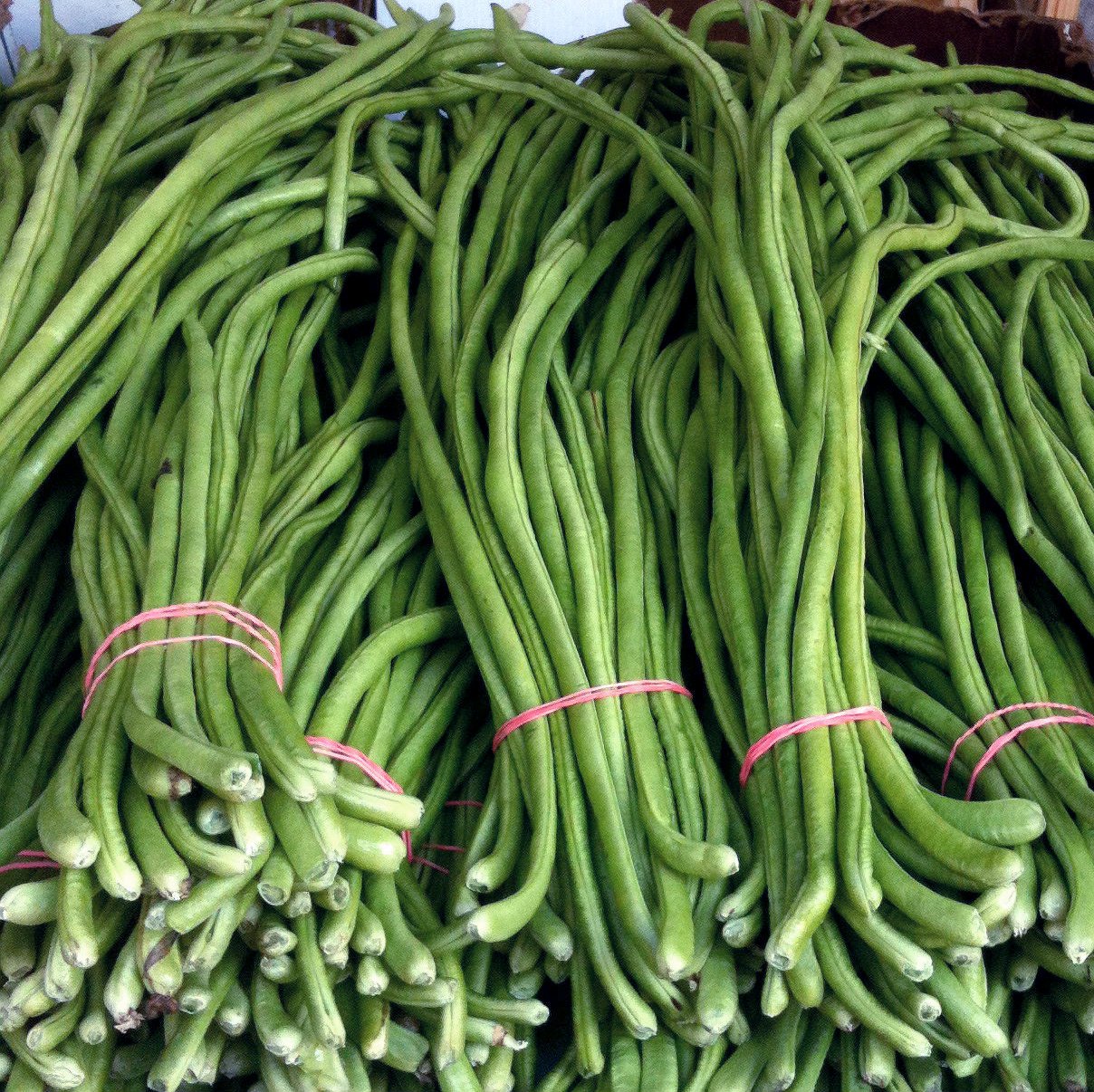
Heirloom Bean Yard Long Vigna Unguiculata Sesquipedalis
It is doing extremely well in the Texas heat. Another great feature is the bend ability that lets you create wondrous eye appealing edible conversation material.
Unique and delicious, yard long beans grow extra long with super slender pods that are a tasty addition to stir-fries and stews. This variety produces long, dark green, slender, round string-less pods that grow 16-18" (to 45 cm) long. This strong, easy to grow plant needs a warm climate to thrive and will reward you with high yields. They are very
crisp, tender and delicious. Try in recipes that use snap beans. Prepare by cutting into 2" sections. Shell mature pods and use as dried beans. 70 Days Also known as Chinese long bean, garter bean, snake bean, spaghetti bean, yard long bean, asparagus bean.Yard Long Bean Seeds
Posted by
Garden Medusa
1 comments
Labels: asparagus bean, Chinese long bean, garter bean, noodle bean, snake bean, spaghetti bean, Vigna Unguiculata Sesquipedalis, yard long bean
Thursday
Incredible Maniltoa
Latest stunning discovery.
The Australian Manitloa is a highly ornamental small tree with very spectacular, cascading pink new growth. As an added attraction to the spectacular new foliage growth it will produce fluffy white balls of flowers. It will grow into a medium size tree suitable for suburban back yards.
They produce a brown pod containing one brown seed, probably one of the reasons why no one sells them.
Common names include: Silk Handkerchief Tree, Cascading Bean, Native Handkerchief Tree.
Posted by
Garden Medusa
2
comments
Labels: Cascading, Cascading Bean, Cascading Maniltoa, lenticelleta, Maniltoa, Native Handkerchief Tree, rare plant, scarce seeds, Silk Handkerchief Tree
Tuesday
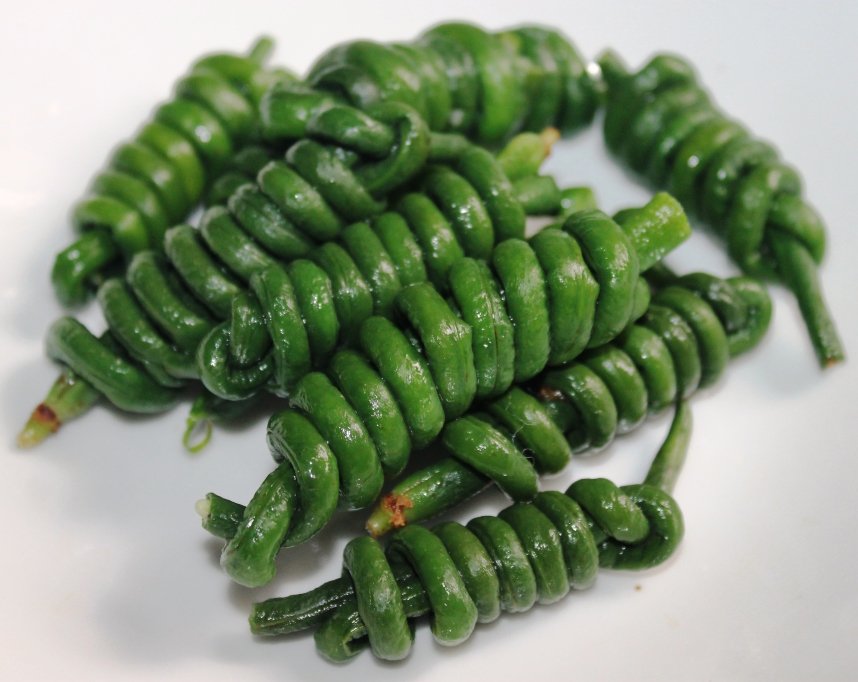
Edible Ornamental Loroco Fernaldia pandurata
Loroco is native to Central America, and was
called Quilite, which in the indigenous language means “Edible herb”. It
is a perennial plant that produces flowers from May to October in El
Salvador, but with irrigation can produce year-round. The Loroco plant
is a tropical flowering woody vine with ornamental flowers. It grows
wild in El Salvador, Guatemala, Honduras, and Nicaragua, and prefers a
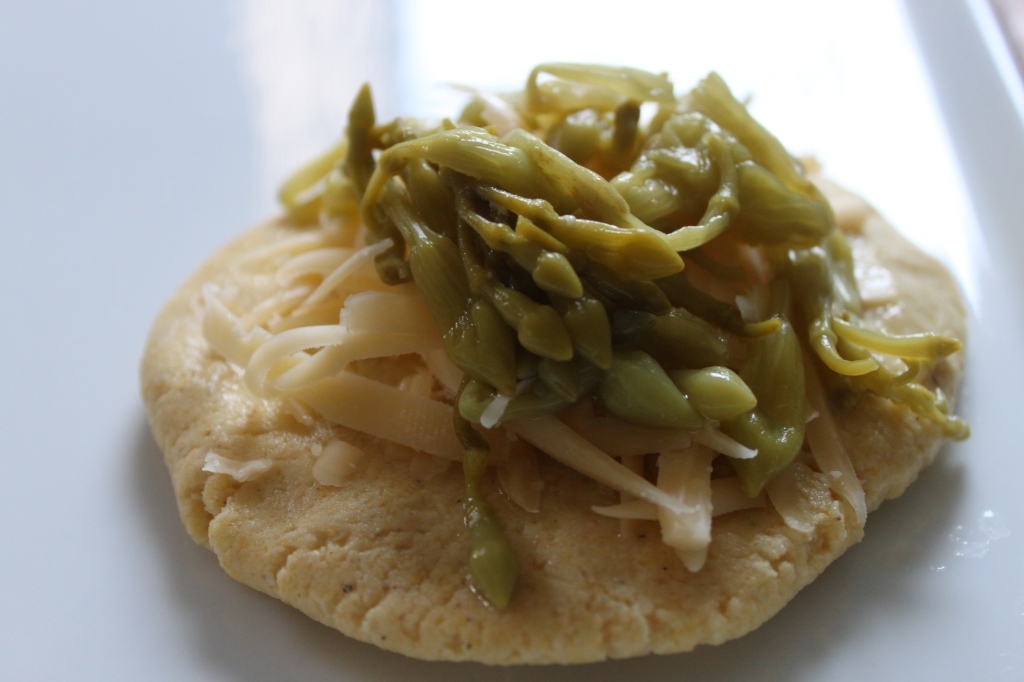
temperature range between 68 and 90 F.The flowers are harvested and used in the cuisine of El Salvador and some other countries in Central America. It has a unique, pungent flavor that is used in 'pupusas', a corn-based food popular in El Loroco. Loroco tastes "green" with overtones of nuts. The closest taste perhaps to compare the "green" part to is chard, or a cross between mild broccoli and squash
Loroco is propagated principally by seed, but can also be propagated by cuttings. It takes about three to four months from seed to flowering.
The leaves can be 1 1/2 to 8 1/2 inches (4 to 22 cm) long and 1 1/2 to 5 inches (1 1/2 to 12 cm) wide. The vine produces flowers in clusters of 10 to 32, averaging 25 per cluster, that in turn, if unharvested, produce pods up to 13 inches (34 cm) long. Seeds are very hard to find. Scarce Seeds available here.
.
Posted by
Garden Medusa
1 comments
Labels: edible, edible flower, edible vine, Fernaldia pandurata Woodson, Flor de Loroco, Loroco, Pupusas, sustainable
Friday
Chilean Zabala Fruit Lardizabala funaria
The Flowers are followed by equally fascinating, dark purple, sausage-shaped fruits two or three inches long. The fruits are sweet, pulpy and edible and are sold in markets in Chile where they are much appreciated.
Although they will tolerate a temperature as low as 14°F (-10°C), give it the warmest, most sheltered spot in your garden. A cool unheated greenhouse will do just as fine.
Seeds....
Posted by
Garden Medusa
0
comments
Labels: Chilean Zabala Fruit, Cogüilera, Lardizabala funaria, Voqui-cóguil
How to Test older Seeds for Germination
Nobody wants to plant dead seeds but just because it’s old doesn’t mean it won’t grow. Some seeds will germinate and grow for up to 5 years after the date they came from the field. And, at the price of quality food plot seed, it’s worth a second look.
It depends upon what kind of seed it is, how it was cared for, and how it was stored. Seed should be kept cool, dry, and clean and protected from pests and insects in some sort of protective container.
Food seeds can be broken into 2 categories: hard seeds and soft seeds. Hard seeds are hard to the touch and generally store quite well. Soft seeds are softer to the touch and typically do not have a hard coating to protect them. They don’t store particularly well even under ideal conditions
The best way to find out if the seed is still good is by testing germination. Testing seed is simple and you will know if you have good seed in a few days. Spread the seed in question on a moist paper towel. Use about a half dozen seeds (depending on size) per square inch.
Moisten and cover the seeds with another paper towel. Cover with saran wrap or place in a zip lock bag to help keep the medium moist. Be sure to establish and maintain contact between the seed and the testing medium you have placed the seeds on. Keep the whole thing moist, warm to the touch, and provide plenty of light. Basically, you are trying to simulate growing conditions and most seeds won’t germinate in soils below 60 degrees.
In a day or two most of the viable seeds will swell, crack open and start sending out roots and shoots. That’s the germination you are looking for. If nothing happens for a week, the seed you are testing is probably dead (unless you have allowed the seeds to dry out, or drown, and die).
This method may not always apply to exotic, tropical and rare type of seeds. Follow special instructions on those.
Posted by
Garden Medusa
0
comments
Labels: germination of seeds, germination test, old seeds, testing germination
Monday
How about them Apples...Berry Tomatoes
This vigorous rare tiny wild tomato Solanum pimpinellifolium is like no tomato you've ever seen before!
Perfect for baskets, window boxes or raised patio containers, the cascading plants live up to their name, producing literally thousands of sweet, juicy, bite-sized tomatoes in an inexhaustible supply throughout the summer!
They are the tiniest of the tomato family, measuring only about 10mm in diameter, sweet and crisp flesh, almost explore in your mouth, delightful and to die for! It is considered to be the wild form of many- perhaps even all- cultivated tomatoes. Great for use as a unique garnish, much sought after by gourmet restaurants.
Note that although these are a different species, they will readily cross with other tomatoes. If you are saving seed, isolate these plants. Seeds found here....
Posted by
Garden Medusa
5
comments
Labels: Currant Tomato, gourmet tomato, gourmet vegetable, heirloom tomato, mini tomato, Mini vegetable, novelty vegetable, Organic, Solanum pimpinellifolium, Sweet Pea Tomato Seeds
Friday
The Amamzing Kaka Beak Plant
Clianthus is an attractive semi-evergreen scrambling shrub with pinnate leaves and spectacular claw-like flowers in spring and summer.
This exotic shrub puts on a magnificent show. Now extinct in the wild, it produces dense masses of bright pink and red showy flowers-up to 15 in a bunch, suspended from arching branches.
A spreading, fast-growing shrub with fern like foliage tolerates a wide range of soils and withstands frost to 23F. Needs protection from heavy frost. The flowers are bird pollinated and the lobster claw-like flowers bloom from mid summer to autumn.
Seeds....
Posted by
Garden Medusa
0
comments
Labels: clianthus puniceus ‘albus’, clianthus puniceus ‘rosea’, kaka beak, parrot's beak, white lobster claw
Starting Your Vegetable Seeds Early!
All green thumbs (and a few green fingers) know that sprouting seedlings instead of buying store-grown plants saves you nearly 90% on your gardening costs. But how do you sprout peas, squash, and tasty tomatoes when there’s still a chill outside?
The answer can be found on your breakfast table. Do I have you walking on eggshells? Eggscellent!!

7 Reasons to get cracking:
- The entire eggshell starter pot is biodegradable.
- Cost for the eggshell planter is $0.00 — they’re free if you eat eggs.
- Eggshells contain soil-happy minerals, such as calcium and other earthy nutrients.
- Eggshell seedling pots are pet safe and kid friendly.
- Starting seeds inside (in any container) gives you a huge head-start on your garden, far before the last frost.
- Sprouted seeds are heartier and stronger when planted.
- Sprouting indoors lets you cull the weakest seedlings and remove the ones that failed to germinate.
3 Tips:
Before you plant the seeds, make sure you wash the eggshells and then boil them in a pot for three minutes to kill any bacteria.
Protect eggshells. Place each eggshell in a cardboard egg carton (or a small pot) for support.
When planting, give each eggshell a gentle (yet crushing) squeeze — you want the seedling roots to easily find the fresh soil.
I managed to grow peas, beans, basil, tomatoes and jalapenos successfully in egg shells. Happy growing!
Posted by
Garden Medusa
1 comments
Labels: thrifty gardening, vegetable seeds, vegetable start, winter-sowing
Asian Water Chestnut Eleocharis dulcis
Off we go, starting our own water chestnuts again. In case you ever had them in stir fry, the fresh bulbs are 100 times better than the canned. Delicious. Plus, I know in what water they are growing (clean water) ;)
Posted by
Garden Medusa
1 comments
Labels: Asian Water Chestnut, Chinese Water Chestnut, Eleocharis dulcis, Fresh Water Chestnuts
Chatter Flower Jovellana
What a cutie !!!!!
Jovellana does not have a common name. But it's been called Chatter Flower, Angels Goblet and Tea Cup Flower. It is a rare evergreen, perennial plant
from Chile, that grows around 5 feet tall. Each flower spray has dozens
of ½ inch blooms, which open at different times over a period of 1 to 2
months. The sprays would make an exotic addition to flower
arrangements. Even without blooms this is an attractive plant, with
woody stems and bright, mint-shaped foliage. The leaves have a great
minty-spicy aroma when rubbed.
This is a cool-climate species that might not thrive in warm climates.
The ideal temperature seems to be between 40 and 80 F. It is very rare
in cultivation, and fresh seeds are rarely seen for sale. Great for Pot
culture.
.
Posted by
Garden Medusa
0
comments
Labels: angels goblet, jovelllana, rare flower, rare seeds, rare vine, teacup flower, unusual flower
Tuesday
Vigna Caracalla Highly Scented Cork Screw

Super cool Collector Vine Cochliasanthus Vigna caracalla! Definitely a to "drool" over Plant. Very hard to find and accordingly priced.
> True Snail/Corkscrew Vine Cochliasanthus Vignacaracalla - Seeds found here
> Purple Snail Vine Phaseolus Giganteus adenanthus - Seeds found here
.
.
Posted by
Garden Medusa
5
comments
Labels: Cork Screw vine, Highly Scented, ornamental vine, rare flower vine, shell vine, Snail Vine, unusual flower, unusual vine, Vigna caracalla
Wednesday
Stunning Dainty Anemonopsis
One of the Japanese aristocrats. Dainty and rare.

Native to the Japanese island of Honshu, Anemonopsis is frost hardy to
zones 5-9. This hard-to-find woodlander forms clumps of cimicifuga-like
foliage topped with nodding, waxy lilac flowers in late summer.
It flowers in late summer, with slender stems held above the foliage
carrying delicate flowers with outer lilac sepals and inner violet
petals forming a cup. Although not a small plant, as the flowering stems
can reach up to 2', still has a sort of airy, dainty appearance among
the others woodlanders.
Anemonopsis is self-fertile and an isolated plant will set modest
amounts of seed. If sown in containers and exposed to winter chilling,
germination will occur the next spring. Anemonopsis seed retains its
viability in storage to a reasonable degree. Anemonopsis can also be
propagated by division.
Anemonopsis Seeds found here...
Posted by
Garden Medusa
0
comments
Labels: Anemonopsis, Anemonopsis macrophylla, Anemonopsis seeds, endangered species, rare anemone, rare flower, rare plant, rare seeds
Thursday
Ephedra Ma Huang Herb Ephedra Sinica
Ephedra sinica - Ma Huang, an evergreen perennial herb that grows in some parts of China, is valued for its healing and stimulating properties for at least 5000 years. Related to junipers, it produces small cones from March to April. Reaches a mature size of about 3' tall and wide. Survives best in full sun, can handle drought, reflected heat, and cold down to 0 degrees F. Fine landscape plant or for making tea. In ancient China it was used for its medicinal qualities. Asthma, fever and colds were treated with Ma Huang. Since isolation of Ma Huang from several Ma Huang species, in the early 1920s, Ma Huang became a popular drug for the treatment of asthma.
The Drug Ephedra itself (ephedrine alkaloids or active ephedrine alkaloids) appears to be monitored or banned in some states and countries, however botanical seeds and plants are not included. You can find more information here:
- http://www.ephedra.nu/en/legal.htm
- http://www.erowid.org/plants/ephedra/ephedra_law.shtml and
- http://www.erowid.org/chemicals/ephedrine/ephedrine_law.shtml.
Seeds found here...
.
Posted by
Garden Medusa
0
comments
Labels: ephedra law, ephedra plant, Ephedra sinica seeds, Ma Huang seeds