Thursday

Wolfberry or Goji Berry - Himalayan Superfood!

 My newest discovery is the Goji berry. Super easy to germinate from seeds!! I suggest getting already extracted and cleaned seeds, rather than the pod, unless you feel like spending hours picking out the micro tiny seeds, rinsing them and drying them.

I got mine here: Goji Berry Seeds

The Chinese revere Wolfberry as a national treasure among the most nutrient dense of the nation’s medicinal herbs. This reputation has stimulated scientific research about its potential health benefits and systematic cultivation.

The wise old Chinese healers used the fruit from the Wolfberry bush to strengthen the eyes, liver, kidneys, and build healthy blood, circulatory and immune systems. Wolfberries contain carotenoids, which, as we all know are potent antioxidants. One of its key constituents is lycium barbarum polysaccharide (LBP)...what does that do?

Well it will protect your body against cellular damage. It has been said that people who consumed them on a regular basis, lived very healthy lives for 100-plus years.

Gouqizi or gouqi, the Chinese Mandarin names for goji ("wolfberry", Lycium barbarum L.), is a red-orange berry of the Solanaceae nightshade family that includes tomato, eggplant, chili pepper and potato.

In vernacular, gouqi (Mandarin pronunciation "goo-chee"), has become “goji”. For at least 2000 years, Wolfberry has grown wild in China and used in common recipes and traditional Chinese medicine. Wolfberry derives its name from "wolf-peach" -- the tomato, its larger botanical cousin (Solanum lycopersicum), where "lyco" is Greek for wolf and "persicum" is peach.

Digg this

Friday

A Different Kind of Hawaiian Lei Flowers


Definitely in the Rare, Exotic and Unusual category Calotropis gigantea, Crown flower or Giant Milkweed are great additions to any tropical garden! According to the Hawaiian culture it is a symbol of royalty and is made in to stunning leis and worn and adored by the last queen of Hawaii named Queen Liliuokalani.

Calotropis gigantea (Crown flower) is a species of Calotropis native to Indonesia, Malaysia, Philippines, Thailand, Sri Lanka, India and China.


 The clusters of waxy flowers are white or lavender, and have a little "crown" in the center composed of five downward-pointing, twisted petals that resemble an elegant miniature royal crown. They are produced in bunches among the leaves, which are light green and fuzzy on both sides, growing on succulent milky stems. When fully grown, each small tree or large bush can support hundreds of Monarch butterflies as the adults sip nectar from the flowers and the caterpillars eat the leaves. Don't worry about the caterpillars, as the plant will quickly regrow whatever they eat and more, but do protect it from the cold. It is not frost-hardy at all and must be planted in a large pot and kept indoors during winter.
 

There is another variety,
Calotropis procera, with beautiful purple flowers


Digg this

Tuesday

Fresh Gourmet Asian Water Chestnuts! Yum!

Asian Water Chestnut Eleocharis dulcis

Off we go, starting our own water chestnuts again. In case you ever had them in stir fry, the fresh bulbs are 100 times better than the canned. Delicious. Plus, I know in what water they are growing  (clean water) ;)

Eleocharis dulcis is tropical Asian aquatic sedge having an edible corm and cylindrical leaves. The succulent corm of this plant ist used in Asian cooking. This is NOT to be confused with the aquatic invasive Asian water chestnut (Trapa natans)
Chinese water chestnuts (Eleocharis dulcis) and European water chestnuts (Trapa natans) are two unrelated water plants that carry the same name. The Chinese water chestnut resembles a small muddy tulip bulb and is sweet and crunchy; the European water chestnut resembles a tiny horned bull’s head and is quite starchy. Americans are most familiar with the Chinese water chestnut. Chinese water chestnuts grow underwater in mud, have brown or black scale-like leaves, and are round, though somewhat flattened. They are the roots of an aquatic plant that grows in freshwater ponds, marshes, lakes, and slow-moving rivers and streams in Japan, Taiwan, China, Thailand, and Australia. They are difficult to harvest, explaining their generally high price. Chinese water chestnuts have mildly sweet, crisp, white flesh and are excellent raw on skewers with dip/

The European water chestnut or water caltrop has seed capsules with four spikes and is named after the caltrop, a vicious medieval weapon with four iron points. This hard-shelled ebony black fruit has two prominent, down curved horns resembling a bull’s head and a woody, sculptured surface that looks like a face or a bat. It grows abundantly in Indonesia, Southeast Asia, southern China, Japan, Italy, and tropical America. Its Chinese name, ling ko, means “spiritual horn.”

Storage: Store water chestnuts, unwashed and unpeeled, in a loosely closed paper or plastic bag in the refrigerator crisper for up to 2 weeks. Keep water caltrops in a cool, dry place.

To Grow: Easy to grow in a tub filled with dirt about 4" high . Water to 2" above soil level. Consider appropriate spacing as each corm produces quickly about 8-10 new corms. The closer they sit the harder it is to separate them.

To Buy: 
  1. Tricker Aquatics: Water Chestnuts
  2. COTW Rare Seeds: Fresh Asian Water Chestnuts 

Digg this

Friday

It's Time for Some Color!!!


I just bought masses of seeds to get started on the spring. I am so ready!!!!!! Pink  is the first color of choice this time and off we go, planting our acquired seeds from the magnificent Pink Coral Vine

It's also called Queen's Wreath, Queen's Lace, Chain of Love, Chinese Love Vine

The Pink Coral Creeper is native to Tropical America. Not often seen, the rare coral creeper is a favorite for its showy flowers seen mostly in summer and fall. Makes a fabulous container plant in cooler areas.

Coral creeper climbs on tendrils and has interesting heart-shaped leaves. Plant in full sun in most any soil. Water to establish, prune to control. Best used to run up supports such as a tree or a trellis. According to the seller, it is a carefree plant to own.


Digg this

Moringa, Tree of Life

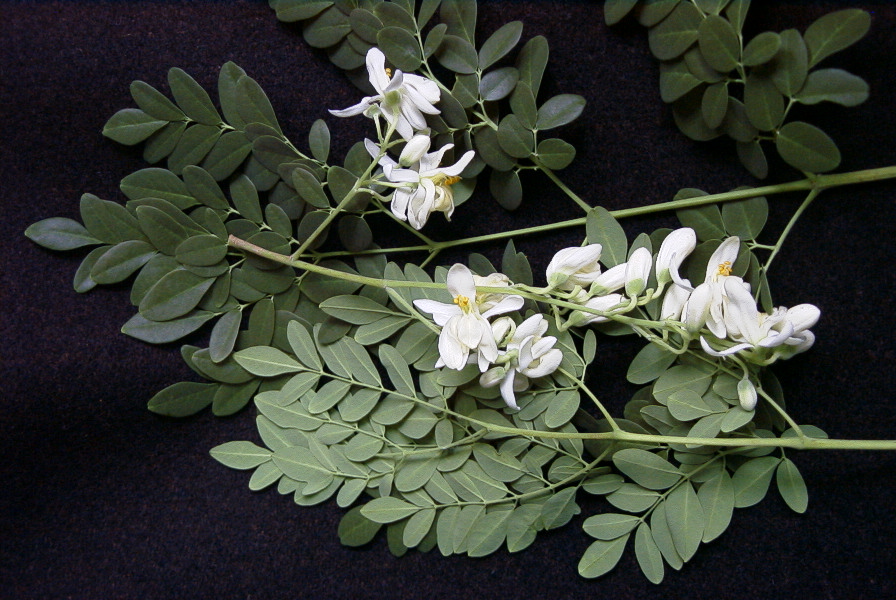
Also known as Moringa oliefera, Moringa pterygosperma, Drumstick tree, (Horse)radish tree, Mother’s best friend, West Indian ben, Árbol del ben, Morango, Suhanjna Moringa, is native to north India but is now found throughout the tropics. It grows fast and reaches up to 12m. The bark is gray and thick and looks like cork, peeling in patches. It looses its leaves from December to January and new growth starts in
February to March. Moringa produces cream colored flowers when it is 8 months old and the flowering season begins in January and continues through to March. The fruit ripens from April to June and the pods are triangular in cross section, 30 to 50cm long and contain oily, black, winged seeds.

Temperature
It will survive in a temperature range of 25ºC to 40ºC but has been known to tolerate temperatures of 48ºC and light frosts.

Soil
Moringa prefers neutral to slightly acidic soils and grows best in well-drained loam to clay-loam. It tolerates clay soils but does not grow well if waterlogged

This is a plant of wide and diverse uses.
· Human food
· Animal fodder
· Water purification
· Natural medicines
· Fertilizer
· Living fence
· Natural pesticide
· Domestic cleaning agent
· Fuel wood and other uses

Its leaves are said to contain 7 times the vitamin C of oranges, 4 times the calcium in milk, 4 times the vitamin A in carrots, 3 times the potassium in bananas, and 2 times the protein in milk.
Human food
All Moringa food products have a very high nutritional value. You can eat the
leaves, especially young shoots, young pods, flowers, roots, and in some
species even the bark. Leaves are low in fats and carbohydrates and rich in
minerals, iron and vitamin B.

Fresh leaves
Of all the products of the tree the leaves are used the most. They become
tougher as they get older so it is best to pick the growing tips and young
leaves. Remove the leaves from the woody stem, as this will not soften
during cooking. The leaves can be used in the same way as spinach. An
easy way of cooking them is to steam 2 cups of freshly picked leaves for a
few minutes in one cup of water, seasoned with an onion, butter and salt or
other seasonings according to taste.


Seeds Found here

Digg this

Phanera Fairy Vine Bauhinia corymbosa

A stunning and hard to find evergreen vine in sub-tropical conditions, that can be semi-deciduous in cooler climates with older leaves dropping in cold winters. The beautiful vine has very attractive and unusual foliage and orchid-like flowers with unique 2 lobed leaves.


The pale pink flowers with dark veining are abundant from spring to autumn and are complimented by the purple tinged new growth. It is perfect for covering a pergola, fence or over a tree and is spectacular as a ground cover especially when in flower.
 
Found here: Bauhinia corymbosa

Digg this

Tips for these hard to germinate seeds....

Starting seeds the traditional way usually includes a seed starting mix made up of equal parts of peat moss, vermiculite, and perlite. When mixed together with a little water, this mixture will hopefully support the growth of your new seeds. The risks are too much water, too little water and even seed rot if the soil is too wet. Here is how you can start to germinate seeds in more efficient manner.

Hydro Soil is the perfect medium to grow seeds, especially those difficult to start seedlings.
Biodegradable and non-toxic.

 
You will need:
  • Hydro Soil (-flavorless, dye free prepared gelatin works also)
  • Water Sterilized containers such as baby food jars or small yogurt containers
  • Sheet of clear plastic or piece of glass
  • Powdered cinnamon

Prepare dry hydro soil per instructions. Pour at least 2 inches of the mass into sterilized containers and push at least 3 seeds in each gelatin filled container.  Place your containers in a warm, sunny spot and cover with clear plastic or glass.

Be mindful of mold forming. To reduce the danger of mold, you can use boiling water to hydrate the dry soil crystals, but be sure to let it cool down before you plant any seeds.  If you see mold, just dust with a little powdered cinnamon to keep the mold in check.

Once your seedlings have sprouted and are about an inch or two tall, transplant them (with the hydro soil) into the seed starting mix.
It will continue to provide moisture for your seedlings as they grow and you have less risk of injuring your new seedlings.

You can also use regular baking gelatin instead of hydro soil, this works also.

Gelatin is made from animal bone and therefore has high level of nitrogen and other minerals.
It will continue to "feed" your seedlings as they grow and you have less risk of injuring your new seedlings.


Hydro Soil Source
.

Digg this

Sunday

Spectacular Snowdrops on a Branch


The Japanese Snowbell is a beautiful small tree. Rounded and horizontally layered. 3/4-inch bell-shaped white flowers with yellow stamens. Dark green leaves turn yellow or orange-red in the fall. Native to Japan. Great to use as a border in a garden or to provide shade on a patio.

When choosing a location, keep in mind that the Japanese Snowbell has a moderate growth rate. It grows up to 30 feet in height and 30 feet in spread. It can be planted in zones 6 to 8. Prefers full sun to light shade and moist, acid, rich, well-drained soil. Shallow root system.


How To Start These Seeds:
Scarification: Soak in water, let stand in water for 24 hours.
Stratification: Warm stratify for 90 days, cold stratify for 120 days
Germination: Sow seed 3/8 inch deep, tamp the soil, mulch the seed bed.

If refrigerated upon receipt, these seeds can be stored for up to a year before you decide to use them.


Seeds found here:


Digg this

Edible Dead Man's Fingers

Sounds gross doesn't? But really isn't. The strange fruit is also named Decaisnea fargesii, Bluebean, Blue Sausage and Blue Cucumber and is really a site to behold.

This is a shrub that is definitely different. From China, it is a deciduous shrub forming clumps of tall, upright shoots with large, pinnate leaves, themselves ornamental, up to 3 ft. in length. The somewhat unusual flowers too are attractive, yellow-green in colour and appear in early summer in drooping racemes up to 18 ins. in length. However, the main reason for growing this plant is for its quite remarkable seed pods. An eye-catching, fruiting shrub with an exotic appearance! Great for juicing.


Decaisnea fargesii is self-fertile, but will produce more fruit if planted in small groups (2 or 3 plants).


.

Digg this

Saturday

Green Living Natural Moss Jewelry

And the plant saga continues. Happy New Year 2011. There is a conversation piece or two or three. Handmade natural Moss Jewelry.
Silver plated bezel cups filled with genuine alpine grown soft moss, soft to the touch. Lives on natural air and humidity. 


Digg this

Abrus precatorius Rosary Pea

 Known commonly as Jequirity, Crab's Eye, Rosary Pea, 'John Crow' Bead, Precatory bean, Hung Tou.

The Rosary pea is a small, high climbing vine with alternately compound leaves, 2-5 inches long, with 5 to 15 pairs of oblong leaflets. The flowers are pale violet to pink, clustered in leaf axils. The pod is oblong, flat and truncate shaped, roughly 1½ - 2 inches long. This seedpod curls back when it opens, revealing the seeds. The striking seeds are small, brilliant red with a black spot and are used for jewelry and in percussion instruments.
Propagation: This plant species is propagated through seeds and very easy to grow.
Zone: 9 (10 to 20°F, down to about -6°C)
Note: The seeds are toxic if digested and care should be used when drilling.


US Seeds Source:

Digg this

Tuesday

Geissorhiza radians South African Wine Cup

I was waiting for these seeds forever. The only other company selling fresh seeds got bid into the $30 dollar range for 5 seeds. 
This rare gem is from South Africa.
Geisshoriza Radians is a stunning South African bulbous collector plant that grows in winter, flowers in spring, having a dormant period in summer. Stunning flowers of deep blue with a red center, best suited for pot culture.


Still gathering more info i.e. growing tips etc...please stand by ;)

Digg this

The Thailand Parrot Flower

Stumbled upon during research:
Impatiens psittacina Hook.f.
The Thailand Parrot Flower
Dork Nok Khaew
Flower Bird Parrot


These delicate parrot flowers simply hang there. Whichever angle you look at them from you’d still see pink parrots. They’re a rare phenomenon.


A balsam, Impatiens psittacina is a very rare impatiens species first discovered in 1899 by British officer A.H. Hildebrand in Shan States of upper Burma and identified to the botanical world in 1901 by botanist E.D. Hooker.
This plant raises only in a small part of north Thailand (near Chiang Mai), Burma, and one territory of eastern India. The species can be found in several botanical reference books including Plants of India.
Hooker originally stumbled upon the plant in India and brought back the seed to the Royal Botanic Garden Kew in London. Those seeds did not reproduce after the first year.


The parrot flower is one of nature's most beautiful creations. A rare plant and a protected species. The Thai government has elected to ban the export of seeds or plants because they are extremely rare. Punishment is severe for those who break this law.

Note: I have been seeing some questionable sellers from China offering these seeds. I am not sure what type if seeds they are selling (probably carrots), but they are definitely not Parrot Flower seeds!! 
It angers me that fraud china sellers are duping people into buying rainbow roses, black rose and some other non existing junk. Don't get duped! Do your research!

Digg this

Friday

Bejuco De Santiago Aristolochia

We have a new "Baby". I just bought a Duchman's Pipe, a Aristolochia trilobata to be exact.
The Aristolochia trilobata has both beautiful glossy leaves and incredibly weird flowers. According to the gardener, like a Strophanthus, it has long streamers from the flowers that can get over a foot long. Its Nepenthes like blooms distinguish it from other Aristolochias such as elegans, gigantea, brasiliensis and ringens.
Temporarily situated in my office window I am exited to see this one bloom, which should be next year :)

Digg this

Wednesday

Tropical Dogwood Virgin Tree

Who would have thought, a Tropical Dogwood. Look these massive beautiful blooms.
Mussaenda is a rounded evergreen tropical shrub or sub-shrub that will grow to 10’ tall in tropical areas, but more likely will reach 2-5’ tall in containers. Clusters of small, tubular flowers with five large spreading lobes bloom in summer, however it is the large and colorful, ovate, leaf-like sepals (to 3” long) that provide the real ornamental display. Some individual flowers in each cluster will develop a single enlarged sepal. Elliptic to ovate, bright green leaves (to 6” long). Hybrids sold in commerce typically feature flowers in red and/or yellow with showy sepals of white, bright red or pink.

Winter hardy to USDA Zones 9-11. Can be grown in containers that must be overwintered indoors. Use a well-draining potting mix and keep soils consistently moist. Grow in full sun to part shade. Best color in full sun, but plants also appreciate some mid-day filtered sun in hot climates. Bring containers indoors in fall when night temperatures start dropping into the 50s. Overwinter in a greenhouse or a warm sun room. Cuttings may be taken in late summer for overwintering.
This plant is propagated by rooting soft or hardwood cuttings.
Germination of Mussaenda seeds: The soaked seeds are to be planted in plastic cups containing an equal mixture of sand and coir dust.  After spraying water, the cups should be sealed with polypropylene plastic and stored for a month at 57 degrees F for stratification or cold treatment.  At their four-leaf stage, seedlings are ready for transplanting.
If anyone you know sells it or shares it or swaps it, let me know! 

Digg this

Monday

Stictocardia beraviensis Hawaiian Sunset

What a stunning vine! Off and shopping I go. Will update shortly with info about this gorgeous super rare collector vine....


Update. Got seeds! I had to choose between 1 French, 1 German, 2 African and 2 American suppliers, that's it. Ended up buying home based.

This evergreen climber with absolutely gorgeous blooms and lush big leaves is grown all over the Tropics and some subtropical areas. It is related to the Morning Glory with fast growing thick stems and fleshy heart shaped leaves. Cup shaped flowers emerge at the leaf axils in clusters and are 2-3"across, bright crimson with yellow and orange streaking. They are scented and seem to last a day or two. Leaves are large, growing in shade up to 10-12" wide, dark green and velvet, very ornamental even when not in bloom. 

The plant likes lots of water, especially if grown in full sun. As with any blooming plants, the rule is - the more sun, the more flowers. However, this plant can be planted in shade probably with advantage: it will still continue blooming profusely, but the leaves will grow much larger, that will create a gorgeous tropical look. 

If planted in ground, this plant requires significant space due to its fast growing habit. However, it can be easily grown in container as well. You may trim any unwanted twigs which won't hurt the plants appearance and will encourage new blooms in leaf axils. .......

Edit. US Source: Seeds yay!

Photos Credit: Forest & Kim Starr

Digg this

Friday

Oh Pumpkin Tree, Oh Pumpkin Tree....

Wow, pumpkins on a stick!
A most unusual and rare plant in the Eggplant family. It is usually grown through out mountainous areas of Asia.
This pumpkin is edible but like many eggplants, it has a somewhat bitter taste that is common in some Asian dishes.


Incredible showy ornamental garden plant with pretty purple to white flowers, deep purple stems and branches, and very large, peculiar shaped leaves. A beautiful plant to show off to your neighbors or to try out in a hot, spicy Thai recipe. The hot Thai spices blend well with this type of eggplant.


Synonyms: Solanum integrifolium is sometimes listed as Solanun aethiopicum.
Hardiness Zone: USDA Zones 9-11
Size: 3 ft.
Stem/Bud: Stems are erect and covered with spines and hairs.
Leaves: Leaves are alternate, ovate, 10 in. long, serrated and prickly along top midribs.
Flower: Flowers are purple/white and 3/4 in. wide.
Fruit: Fruit are red or yellow, globose, 1-2 in wide, ribbed.
Uses: Use dried fruit in arrangements or for decorations. Dried fruits resemble small, flatten, globose, orange mini pumpkins.
Culture: Grow in full sun in average, well-drained soil.


Stunning flower bed specimen that dries nicely and the branches with fruits make stunning additions to any flower arrangements.

I bought the seeds here


Digg this

Tuesday

The Phenomena of Goth Gardening

Recently I have reconnected with a person from my past. The experience was associated with sweet and bitter memories and she unknowingly pointed out a rather unusual form of gardening. 

The Goth Garden. 

I see many people asking about about Goth or EMO gardening all over the web and I never knew what it meant, thought it was depressing nonsense.

Black flowers? That seems strange to me, because how would a bee or a butterfly be attracted enough wanting to pollinate. 
I am beginning to think that it's probably not any less strange than my desire to find the diamond in the rough, the best of the best, the most unusual, the most challenging and eventually the ultimate (?).

There must be some happiness in black flower gardening. .....I am still researching this phenomena.

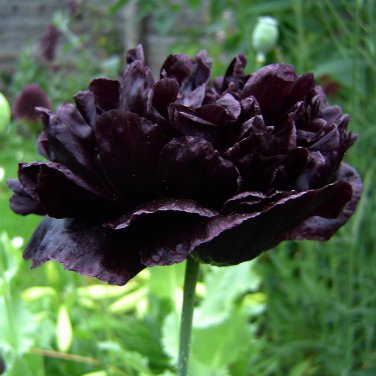
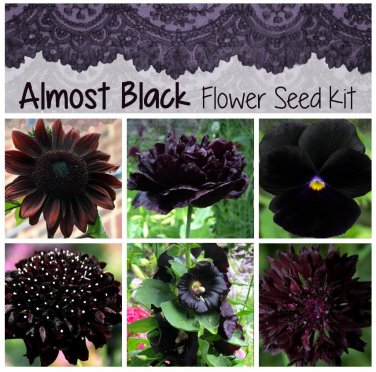
In the meantime, here are some very beautiful and dramatic black or near black flowers :)


Here is a good US source: for black (almost black) flowering seeds

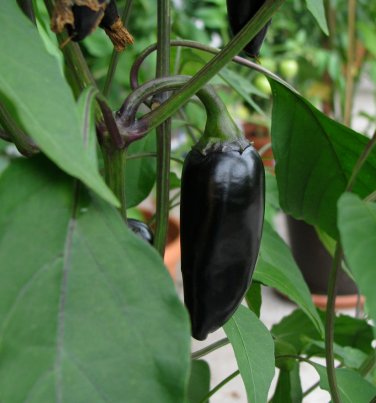
They have gift collections and many many individual species as well, even black vegetables!  - How cool!


Digg this

Amazing Stunning Silver Princess Eucalyptus

Silver Princess Eucalyptus
Eucalyptus caesia magna

The new seeds are planted and happy in trays. Lets see how it goes...


This beauty is considered by many to be the most striking species in the genus Eucalyptus, and certainly has some of the largest flowers. The flowers are 2"-3' in diameter and dangle in clusters, very visible in the sparsely-leaved tree. The stems and flowers buds are all covered in a white powdery 'bloom'. In the wild, this is native to only a few granite outcrops in the desert of Western Australia.

Silver Princess is a small-growing dry zone-dwelling Euacalypt shrub and small tree. It will do well in areas that are dry and that have fairly mild winter lows. One absolute requirement is a well-drained soil. The plant is known to grow in the Santa Cruz botanical gardens and in Arizona, so it can succeed on US soil, but it must have very sandy loams in the gardens.
This weeping small tree benefits from pruning and shaping. It is hardy to at least 22°F.

Digg this

Monday

The spectacular Firewheel Tree

We've started the seeds. This one will be a bonsai. When buying seeds from Australia, note that many of the seeds need a smoke pre-treatment to aid germination. It's basically a piece of paper infused with smoke primer solution which contains a combination of natural substances that overcome dormancy and stimulate seed germination. The degree of germination success varies with the species, but on average, treated seeds give at least twice the number of seedlings that untreated seeds do. Given the rarity, cost and availability of some seeds, it's a wise move to use the primer. Very hard to find for sale and very expensive. Some sellers offer a free bit of primer enough for the amount of seeds sold - but not very many!

There are approximately 30 species in the genus Stenocarpus. Most are found in New Caledonia and there are about 7 species native to Australia. S.sinuatus is the best known species as it is widely cultivated both in Australia and overseas.
The firewheel tree takes its name from the configuration and color of the inflorescence in which the small flowers have a wheel-like arrangement. It is one of Australia's most spectacular trees. S.sinuatus occurs in nature as a tree to about 80 Ft but it is usually smaller in cultivation, particularly in cooler areas. The dark, glossy green leaves may be entire or lobed and up to 18"long. The conspicuous flower clusters are seen in summer through to autumn.
Despite its sub-tropical to tropical origin, S.sinuatus is adaptable to a range of climates and will even succeed in dry climates if additional water is available. It prefers fairly rich, loamy soils but is tolerant of most well drained soils. It may be grown in a sunny or partly shaded location.

Seeds have been located here; US source

Digg this

Saturday

Another Fabulous Tropical Fruit

An Asian friend of mine introduced me to this incredible fruit, so I had to just run and get one.
It's distinctive flavor is melt-in-your-mouth. I was so excited that I planted some of the seeds and after just 2 weeks we had babies. Jackfruit is propagated by seed. Lets see if they will survive!! Wish me luck!

 
Common Name: Jackfruit
Scientific Name: Artocarpus heterophyllus
Family: Moraceae
Jackfruit tree is native to Southeast Asian Countries, but has found it way to other countries like Jamaica, Trinidad and Tobago and others. Jackfruit is a large prickly fruit similar in Durian fruit, it measures 12 to 20 inches long, 8 to 10 inches in width, and weigh about 18 kg. and more. 


Jackfruit are very fragrant, when you open the fruit you will find the fleshly bright yellow part (when ripe) which can be eaten raw or can be cooked with syrup. When unripe its flesh is green, and it can be made into a delicious vegetable dish. Inside the fleshy part are the seeds (nut) which is similar to chestnuts. Jackfruit seeds can be roasted or boiled.

Digg this

Tuesday

Piel De Sapo Christmas Melons

It's getting hot here!! Hope this helps all of us :)


Melon Margarita

Ingredients:
1.5 cup melon puree (see below) Best are Piel de Sapo melon, honeydew or watermelon.
1/2 cup tequila
3 tbsp orange liqueur (I used triple sec)
1/4 cup lime juice
3 tbsp sugar syrup or just sugar to taste
Ice
Coarse salt for the glass rim


Method:
To make the melon puree, remove the skin and seeds of a fresh melon and cut into large chunks. Place in a blender and process until smooth.
Wet the rim of the margarita glass with a piece of lime and dip in coarse salt in a shallow dish to coat the edge of the glass.
Combine all the ingredients along with ice in a cocktail shaker or blender and mix well.
Strain into the prepared Margarita glass, garnish with a lime wedge.

-------------------------------


Piel De Sapo Melon:
The shiney, green, blotched skin fits the literal translation of its name perfectly — "toad skin." But whats in a name. Their flesh is pale green to white and it is very tender, juicy and sweet. Super gourmet melon.
The fruits are oblong, eight to twelve inches long and average about eight pounds, with a shelf life of several months. Relatively rare, the variety originated in La Mancha, Spain.

Digg this