 We've started the seeds. This one will be a bonsai. When buying seeds from Australia, note that many of the seeds need a smoke pre-treatment to aid germination. It's basically a piece of paper infused with smoke primer solution which contains a combination of natural substances that overcome dormancy and stimulate seed germination. The degree of germination success varies with the species, but on average, treated seeds give at least twice the number of seedlings that untreated seeds do. Given the rarity, cost and availability of some seeds, it's a wise move to use the primer. Very hard to find for sale and very expensive. Some sellers offer a free bit of primer enough for the amount of seeds sold - but not very many!
There are approximately 30 species in the genus Stenocarpus. Most are found in New Caledonia and there are about 7 species native to Australia. S.sinuatus is the best known species as it is widely cultivated both in Australia and overseas.
 The firewheel tree takes its name from the configuration and color of the inflorescence in which the small flowers have a wheel-like arrangement. It is one of Australia's most spectacular trees. S.sinuatus occurs in nature as a tree to about 80 Ft but it is usually smaller in cultivation, particularly in cooler areas. The dark, glossy green leaves may be entire or lobed and up to 18"long. The conspicuous flower clusters are seen in summer through to autumn.
Despite its sub-tropical to tropical origin, S.sinuatus is adaptable to a range of climates and will even succeed in dry climates if additional water is available. It prefers fairly rich, loamy soils but is tolerant of most well drained soils. It may be grown in a sunny or partly shaded location.
Seeds have been located here; US source
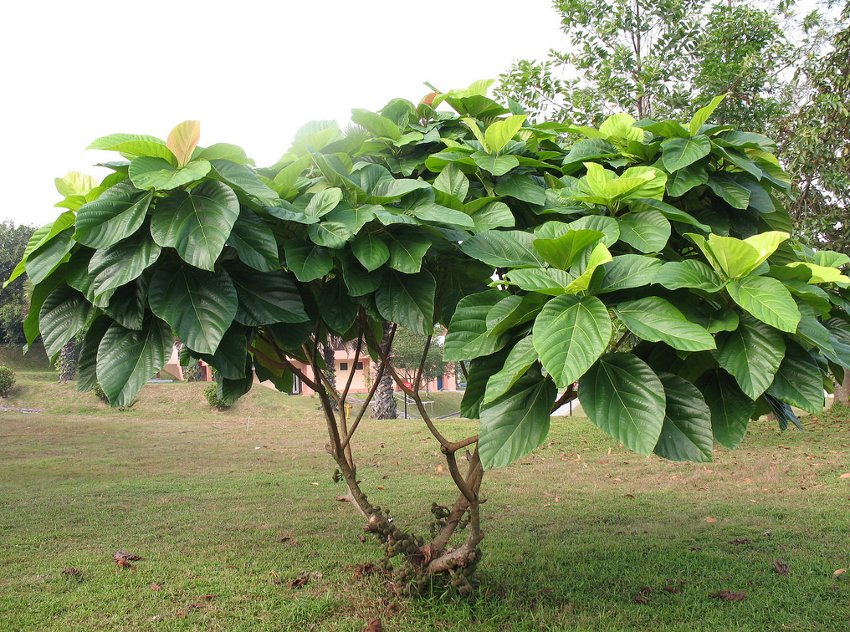 The young evergreen leaves are
starting intensely red, and turn the greenest when reaching their
ultimate size of up to 20” inches length. It can also easily be trimmed
and the plant reacts with even more shoots and leaves on a thicker stem.
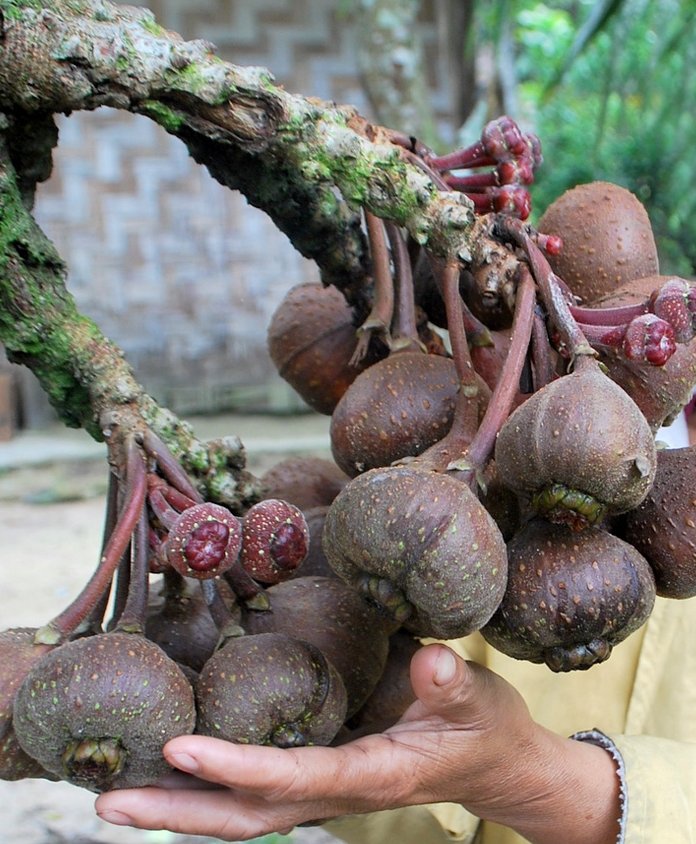
The new growth is a deep red. Figs form in clusters on the trunk and
larger branches, are green and red on the inside.
The young evergreen leaves are
starting intensely red, and turn the greenest when reaching their
ultimate size of up to 20” inches length. It can also easily be trimmed
and the plant reacts with even more shoots and leaves on a thicker stem.
The new growth is a deep red. Figs form in clusters on the trunk and
larger branches, are green and red on the inside. 


