
Latest stunning discovery.
The Australian Manitloa is a highly ornamental small tree with very spectacular, cascading pink new growth. As an added attraction to the spectacular new foliage growth it will produce fluffy white balls of flowers. It will grow into a medium size tree suitable for suburban back yards.
They produce a brown pod containing one brown seed, probably one of the reasons why no one sells them.

Common names include: Silk Handkerchief Tree, Cascading Bean, Native Handkerchief Tree.
Thursday
Incredible Maniltoa


Tuesday
Edible Ornamental Loroco Fernaldia pandurata

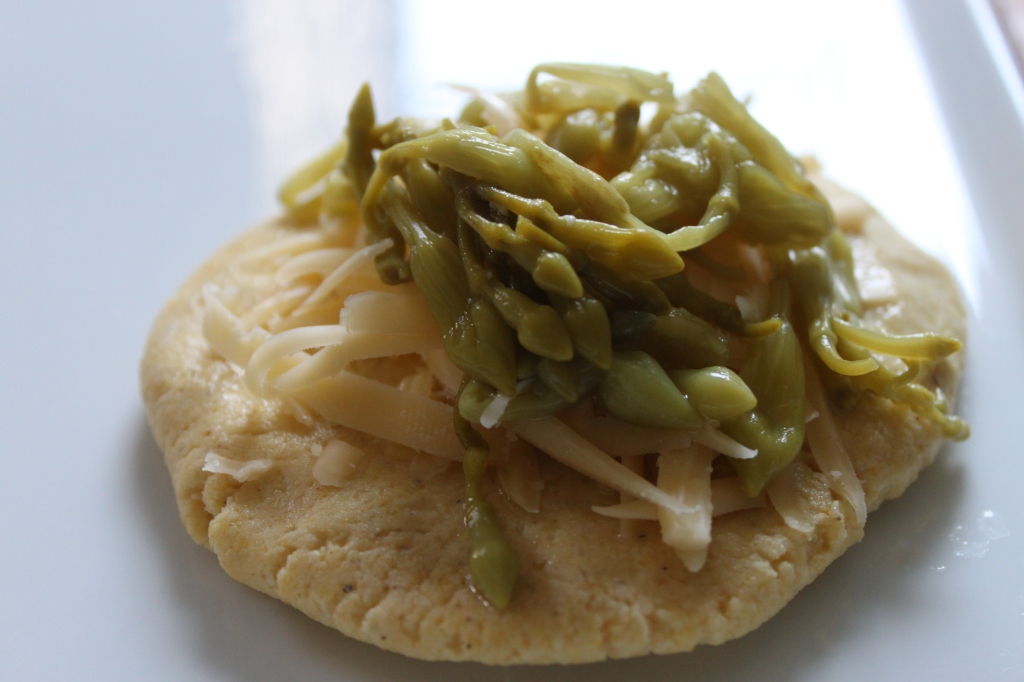 Loroco is native to Central America, and was
called Quilite, which in the indigenous language means “Edible herb”. It
is a perennial plant that produces flowers from May to October in El
Salvador, but with irrigation can produce year-round. The Loroco plant
is a tropical flowering woody vine with ornamental flowers. It grows
wild in El Salvador, Guatemala, Honduras, and Nicaragua, and prefers a
temperature range between 68 and 90 F.
Loroco is native to Central America, and was
called Quilite, which in the indigenous language means “Edible herb”. It
is a perennial plant that produces flowers from May to October in El
Salvador, but with irrigation can produce year-round. The Loroco plant
is a tropical flowering woody vine with ornamental flowers. It grows
wild in El Salvador, Guatemala, Honduras, and Nicaragua, and prefers a
temperature range between 68 and 90 F.The flowers are harvested and used in the cuisine of El Salvador and some other countries in Central America. It has a unique, pungent flavor that is used in 'pupusas', a corn-based food popular in El Loroco. Loroco tastes "green" with overtones of nuts. The closest taste perhaps to compare the "green" part to is chard, or a cross between mild broccoli and squash
Loroco is propagated principally by seed, but can also be propagated by cuttings. It takes about three to four months from seed to flowering.
The leaves can be 1 1/2 to 8 1/2 inches (4 to 22 cm) long and 1 1/2 to 5 inches (1 1/2 to 12 cm) wide. The vine produces flowers in clusters of 10 to 32, averaging 25 per cluster, that in turn, if unharvested, produce pods up to 13 inches (34 cm) long. Seeds are very hard to find. Scarce Seeds available here.
.
Friday
Chilean Zabala Fruit Lardizabala funaria

The Flowers are followed by equally fascinating, dark purple, sausage-shaped fruits two or three inches long. The fruits are sweet, pulpy and edible and are sold in markets in Chile where they are much appreciated.
Although they will tolerate a temperature as low as 14°F (-10°C), give it the warmest, most sheltered spot in your garden. A cool unheated greenhouse will do just as fine.
Seeds....
How to Test older Seeds for Germination

Nobody wants to plant dead seeds but just because it’s old doesn’t mean it won’t grow. Some seeds will germinate and grow for up to 5 years after the date they came from the field. And, at the price of quality food plot seed, it’s worth a second look.
It depends upon what kind of seed it is, how it was cared for, and how it was stored. Seed should be kept cool, dry, and clean and protected from pests and insects in some sort of protective container.
Food seeds can be broken into 2 categories: hard seeds and soft seeds. Hard seeds are hard to the touch and generally store quite well. Soft seeds are softer to the touch and typically do not have a hard coating to protect them. They don’t store particularly well even under ideal conditions
The best way to find out if the seed is still good is by testing germination. Testing seed is simple and you will know if you have good seed in a few days. Spread the seed in question on a moist paper towel. Use about a half dozen seeds (depending on size) per square inch.
Moisten and cover the seeds with another paper towel. Cover with saran wrap or place in a zip lock bag to help keep the medium moist. Be sure to establish and maintain contact between the seed and the testing medium you have placed the seeds on. Keep the whole thing moist, warm to the touch, and provide plenty of light. Basically, you are trying to simulate growing conditions and most seeds won’t germinate in soils below 60 degrees.
In a day or two most of the viable seeds will swell, crack open and start sending out roots and shoots. That’s the germination you are looking for. If nothing happens for a week, the seed you are testing is probably dead (unless you have allowed the seeds to dry out, or drown, and die).
This method may not always apply to exotic, tropical and rare type of seeds. Follow special instructions on those.
Monday
How about them Apples...Berry Tomatoes

This vigorous rare tiny wild tomato Solanum pimpinellifolium is like no tomato you've ever seen before!
Perfect for baskets, window boxes or raised patio containers, the cascading plants live up to their name, producing literally thousands of sweet, juicy, bite-sized tomatoes in an inexhaustible supply throughout the summer!
They are the tiniest of the tomato family, measuring only about 10mm in diameter, sweet and crisp flesh, almost explore in your mouth, delightful and to die for! It is considered to be the wild form of many- perhaps even all- cultivated tomatoes. Great for use as a unique garnish, much sought after by gourmet restaurants.

Note that although these are a different species, they will readily cross with other tomatoes. If you are saving seed, isolate these plants. Seeds found here....
Friday
The Amamzing Kaka Beak Plant
 Clianthus is an attractive semi-evergreen scrambling shrub with pinnate leaves and spectacular claw-like flowers in spring and summer.
This exotic shrub puts on a magnificent show. Now extinct in the wild, it produces dense masses of bright pink and red showy flowers-up to 15 in a bunch, suspended from arching branches.
A spreading, fast-growing shrub with fern like foliage tolerates a wide range of soils and withstands frost to 23F. Needs protection from heavy frost. The flowers are bird pollinated and the lobster claw-like flowers bloom from mid summer to autumn.
Seeds....
Starting Your Vegetable Seeds Early!

All green thumbs (and a few green fingers) know that sprouting seedlings instead of buying store-grown plants saves you nearly 90% on your gardening costs. But how do you sprout peas, squash, and tasty tomatoes when there’s still a chill outside?
The answer can be found on your breakfast table. Do I have you walking on eggshells? Eggscellent!!

7 Reasons to get cracking:
- The entire eggshell starter pot is biodegradable.
- Cost for the eggshell planter is $0.00 — they’re free if you eat eggs.
- Eggshells contain soil-happy minerals, such as calcium and other earthy nutrients.
- Eggshell seedling pots are pet safe and kid friendly.
- Starting seeds inside (in any container) gives you a huge head-start on your garden, far before the last frost.
- Sprouted seeds are heartier and stronger when planted.
- Sprouting indoors lets you cull the weakest seedlings and remove the ones that failed to germinate.
3 Tips:
Before you plant the seeds, make sure you wash the eggshells and then boil them in a pot for three minutes to kill any bacteria.
Protect eggshells. Place each eggshell in a cardboard egg carton (or a small pot) for support.
When planting, give each eggshell a gentle (yet crushing) squeeze — you want the seedling roots to easily find the fresh soil.
I managed to grow peas, beans, basil, tomatoes and jalapenos successfully in egg shells. Happy growing!
Asian Water Chestnut Eleocharis dulcis

Eleocharis dulcis is tropical Asian aquatic sedge having an edible corm and cylindrical leaves. The succulent corm of this plant ist used in Asian cooking. This is NOT to be confused with the aquatic invasive Asian water chestnut (Trapa natans).
Chinese water chestnuts (Eleocharis dulcis) and European water chestnuts (Trapa natans) are two unrelated water plants that carry the same name. The Chinese water chestnut resembles a small muddy tulip bulb and is sweet and crunchy; the European water chestnut resembles a tiny horned bull’s head and is quite starchy. Americans are most familiar with the Chinese water chestnut. Chinese water chestnuts grow underwater in mud, have brown or black scale-like leaves, and are round, though somewhat flattened. They are the roots of an aquatic plant that grows in freshwater ponds, marshes, lakes, and slow-moving rivers and streams in Japan, Taiwan, China, Thailand, and Australia. They are difficult to harvest, explaining their generally high price. Chinese water chestnuts have mildly sweet, crisp, white flesh and are excellent raw on skewers with dip/
The European water chestnut or water caltrop has seed capsules with four spikes and is named after the caltrop, a vicious medieval weapon with four iron points. This hard-shelled ebony black fruit has two prominent, down curved horns resembling a bull’s head and a woody, sculptured surface that looks like a face or a bat. It grows abundantly in Indonesia, Southeast Asia, southern China, Japan, Italy, and tropical America. Its Chinese name, ling ko, means “spiritual horn.”
Storage: Store water chestnuts, unwashed and unpeeled, in a loosely closed paper or plastic bag in the refrigerator crisper for up to 2 weeks. Keep water caltrops in a cool, dry place.
To Grow: Easy to grow in a tub filled with dirt about 4" high . Water to 2" above soil level. Consider appropriate spacing as each corm produces quickly about 8-10 new corms. The closer they sit the harder it is to separate them.
To Buy:
Chatter Flower Jovellana
 What a cutie !!!!!
Jovellana does not have a common name. But it's been called Chatter Flower, Angels Goblet and Tea Cup Flower. It is a rare evergreen, perennial plant
from Chile, that grows around 5 feet tall. Each flower spray has dozens
of ½ inch blooms, which open at different times over a period of 1 to 2
months. The sprays would make an exotic addition to flower
arrangements. Even without blooms this is an attractive plant, with
woody stems and bright, mint-shaped foliage. The leaves have a great
minty-spicy aroma when rubbed.
This is a cool-climate species that might not thrive in warm climates.
The ideal temperature seems to be between 40 and 80 F. It is very rare
in cultivation, and fresh seeds are rarely seen for sale. Great for Pot
culture.
.
Tuesday
Vigna Caracalla Highly Scented Cork Screw


Super cool Collector Vine Cochliasanthus Vigna caracalla! Definitely a to "drool" over Plant. Very hard to find and accordingly priced.
There
are two similar looking plants called Vigna caracalla. Both produce
pretty, spiral-form flowers in soft pastel shades. And the foliage of both is
heart shaped, looking much like that of pole beans which makes sense because
these are legumes and are therefore related to beans. In fact, both plants will
produce slender, bean-like pods under good growing conditions.
Note: The
Snail Vine, Phaseolus giganteus, is
fairly widely available. This is an aggressive, sometimes invasive plant that
tends to root where the branches touch the ground and can be difficult to
eradicate. The flowers of the Snail Vine lack the fragrance that represents a
key reason gardeners choose to grow these plants. Snail vines are often
erroneously sold and labeled as Vigna caracalla.
The
true Corkscrew Vine (or Shell Vine - pictured), Cochliasanthus Vigna caracalla, is difficult to find but worth the effort. This vigorous and well-mannered garden plant produces
very cool spiral flowers with an incredible scent that's reminiscent of Chinese
wisteria and noticeable from 15 feet away. The intricate, curly flowers are
produced for several months during the summer. Originally from South America
and grown by Thomas Jefferson at Montecello, these are memorable plants. If
you've seen one in a private or public garden, locked on the amazing scent and
fanciful flowers, and always wanted one of your own, now you can make that
happen. > True Snail/Corkscrew Vine Cochliasanthus Vignacaracalla - Seeds found here
> Purple Snail Vine Phaseolus Giganteus adenanthus - Seeds found here
.
.
Wednesday
Stunning Dainty Anemonopsis
 One of the Japanese aristocrats. Dainty and rare.

Native to the Japanese island of Honshu, Anemonopsis is frost hardy to
zones 5-9. This hard-to-find woodlander forms clumps of cimicifuga-like
foliage topped with nodding, waxy lilac flowers in late summer.
It flowers in late summer, with slender stems held above the foliage
carrying delicate flowers with outer lilac sepals and inner violet
petals forming a cup. Although not a small plant, as the flowering stems
can reach up to 2', still has a sort of airy, dainty appearance among
the others woodlanders.
Anemonopsis is self-fertile and an isolated plant will set modest
amounts of seed. If sown in containers and exposed to winter chilling,
germination will occur the next spring. Anemonopsis seed retains its
viability in storage to a reasonable degree. Anemonopsis can also be
propagated by division.
Anemonopsis Seeds found here...
Thursday
Ephedra Ma Huang Herb Ephedra Sinica
Ephedra sinica - Ma Huang, an evergreen perennial herb that grows in some parts of China, is valued for its healing and stimulating properties for at least 5000 years. Related to junipers, it produces small cones from March to April. Reaches a mature size of about 3' tall and wide. Survives best in full sun, can handle drought, reflected heat, and cold down to 0 degrees F. Fine landscape plant or for making tea. In ancient China it was used for its medicinal qualities. Asthma, fever and colds were treated with Ma Huang. Since isolation of Ma Huang from several Ma Huang species, in the early 1920s, Ma Huang became a popular drug for the treatment of asthma.
The Drug Ephedra itself (ephedrine alkaloids or active ephedrine alkaloids) appears to be monitored or banned in some states and countries, however botanical seeds and plants are not included. You can find more information here:
- http://www.ephedra.nu/en/legal.htm
- http://www.erowid.org/plants/ephedra/ephedra_law.shtml and
- http://www.erowid.org/chemicals/ephedrine/ephedrine_law.shtml.
Seeds found here...
.
Monday
Tropical Sea Grape

The attractive appearance of the leaves on the flexuous branches and the resistance of the plant to damage by salt make it valuable as an ornamental for ocean-side homes.
 Small white flowers are produced on
slender, hanging racemes 4 to 10 inches long (10 to 25 cm). As many as
40 or 50 fruits may be found on a single cluster, giving the appearance
of a bunch of grapes.
Small white flowers are produced on
slender, hanging racemes 4 to 10 inches long (10 to 25 cm). As many as
40 or 50 fruits may be found on a single cluster, giving the appearance
of a bunch of grapes.The velvety fruits are round to pear-shaped, about 3/4 of an inch long (2 cm), and range from dark purple, to purple, to occasionally off white. The edible pulp surrounds a globular seed with a short sharp point on the top. The pulp is sweetish-acid in flavor and is eaten out of hand or is used to make an excellent jelly.
The sea grape can be readily propagated by seeds and by cuttings of ripe wood. Excellent Houseplant and Bonsai material.
Gourmet Melon Pear Pepino Dulce

If you can grow tomatoes, you can grow pepinos. The Pepino, also called the Melon Pear,is a rare and delicious fruit you're not likely to find in markets.
It's neither a melon nor a pear, but is related to tomatoes and eggplant. Pepino is a leafy, small bush or shrub with beautiful purple and white flowers, easy to grow in any zone free of frost. Perfect for patio containers and hanging baskets.
Pepino or Poire-melon is a species of evergreen shrub native to South
America and grown for its sweet edible fruit. Put them in a salad or eat
them for dessert.
The fruit is common in markets in Colombia, Ecuador, Bolivia, Peru and
Chile, but less often overseas because it is quite sensitive to handling
and does not travel well.
The fruit has been introduced into up-scale markets in Japan, Europe and
North America and it is slowly becoming less obscure outside of South
America. Moreover, in the United States the fruit is known to have been
grown in San Diego before 1889 and in Santa Barbara by 1897.
Ideal for growing in the greenhouse or a sheltered sunny spot outdoors
in a container, as the plants need warmth to flower and fruit
successfully.
Seeds available here
.
Orange Jewelweed Spooted Impatiens

The tubular flowers are orange or yellow-orange speckled with red, the leaves are deep green.
The long seed pods that appear after flowering will explode when touched, scattering the seeds. Plant in full sun to full shade in moist or wet humus rich soil.
It will not grow well in dry soil. Seeds may be planted in spring or fall. Grows quickly. Self sows. Grows to a height of 1-5ft and will spread to 18 - 24 inches.
Jewelweed is often used in aiding the discomfort of poison ivy and insect bites. The juice present in the stems and leaves will alleviate the itching and rash of poison ivy in some people.
Fresh leaves and stems may be crushed and applied to the area. The leaves and stems can also be simmered in a small amount of water and frozen for use at a later time.
Wednesday
True Indigo Dye Plant
 Indigofera tinctoria is the scientific name of true indigo, a plant best known as the source of the blue pigment used to dye denim.
The 3- to 6-foot-tall spreading growth habit bears pale gray-green foliage and pink flowers, making it appropriate for ornamental usage in USDA zones 5 to 9. True indigo is easy to grow from seeds, like all legumes when soil temperatures reach 70 degrees F.
Dye is obtained from the processing of the plant's leaves.
The leaves were soaked in water and fermented in order to convert the glycoside indican present in the plant to the blue dye indigotin. The precipitate from the fermented leaf solution was mixed with a strong base such as lye,
pressed into cakes, dried, and powdered. The powder was then mixed with
various other substances to produce different shades of blue and
purple.
Historically, indigo was a natural dye extracted from plants, and this process was important economically because blue dyes were once rare. Nearly all indigo dye produced today — several thousand tons each year — is synthetic. It is the blue of blue jeans.
Lollipop Vine
 It's been raining a lot and the plants are thriving. I've discovered a new gem.
This rare ornamental collector Specimen vine has spectacular marble sized fruits. Also known as Marble Vine, Bryonia and
Diplocyclos palmatus
Tropical, slender, much-branched climber, perennial, with stems to 6 m
long. Leaves simple, alternate, 5 lobed, hairy above, pale and smooth
beneath, margins irregularly toothed.
Flowers white to yellowish, unisexual, male flowers in small fascicles
and females flowers solitary. It flowers from March to April. Fruit
green with white longitudinal stripes, which become brightly red to
orange with maturity.
Say NO to GMO
Genetically modified organisms, or GMOs, are created when a gene from
one species is transferred to another, creating something that would
not be found in nature.
A large percentage of domestic crops (up to 94% of soybean yields)
have DNA that was tweaked in a lab, yet it is nearly impossible to know
which food items contain these genetically engineered ingredients.
Thankfully new mobile phone apps are making it a bit easier for the consumer to know what she is eating, but this is not enough.
GMOs are bad for your body, bad for the community, bad for farmers and bad for the environment. This is why:
- The health consequences of eating genetically modified organisms are largely unknown. Genetically engineered foods have not been shown to be safe to eat and may have unpredictable consequences. When trans-fats were first introduced, corporations battled to get them onto your grocery shelves – and it is only decades later that this once novel food has been proven to be extremely unhealthful. Many scientists are worried that the genetically altered foods, once consumed, may pass on their mutant genes to bacterium in the digestive system, just like the canola plants on the roadsides of North Dakota. How these new strains of bacteria may affect our body systems’ balance is anybody’s guess.
- Food items that contain GMOs are unlabeled in America. Why so sneaky? The European Union has banned GMOs, as have Australia, Japan, the UK and two dozen other countries that recognize that a lack of long term studies and testing may be hiding disastrous health defects.
- Genetic engineering reduces genetic diversity. When genes are more diverse, they are more robust; this is why a pure bred dog tends to have greater health problems than the dear old mutt. Plants with reduced genetic diversity cannot handle drought, fungus invasions or insects nearly as well as natural plants, which could have dire consequences for farmers and communities dependent on GMO crops for survival.
- Once the mutant genes are out of the bag, there is no going back. Genetically modified organisms contaminate existing seeds with their altered material, passing on modified traits to non-target species. This creates a new strain of plant that was never intended in the laboratory. In North Dakota, recent studies show that 80% of wild canola plants tested contained at least one transgene. In Japan, a modified bacteria created a new amino acid not found in nature; it was used in protein drinks and before it was recalled it cause severe mental and metabolic damage to hundreds as well as several deaths. Japan banned GMOs after this horrific experience. Monarch butterflies have also died after their favorite food, milkweed, was cross-pollinated from Bt corn which rendered it toxic to the endangered species.
- GMOs are not the answer for global food security. Genetically engineered crops have shown no increase in yield and no decrease in pesticide use. In many cases other farm technology has proven much more successful, and even Monsanto agrees that its genetically engineered crops yield less than conventional farming.
- Genetically engineered foods have not been proven to be safe, but the few studies conducted don’t look so hot. The organs of rats who ate genetically modified potatoes showed signs of chronic wasting, and female rates fed a diet of herbicide-resistant soybeans gave birth to stunted and sterile pups.
- Big biotech firms have very sketchy track records, but then again what would you expect from organizations who want to patent the world’s food supply? These massive biotech companies have a history of toxic contamination, deceiving the public and suing small farmers when their patented seeds blew across the fence. Biotech firms sell sterile seeds to African farmers- meaning the seeds are only good for one season, because the plants that grow up will not be able to reproduce. Farmers must buy new seeds every year instead of growing from the previous year’s yield. GMOs are not the farmers’ friend.
- GMOs require massive amounts of pesticides, herbicides and fungicides. These things are poisons, and should not be eaten or allowed to run off into our water supply. But they are, every day, by companies who care far more about the bottom line than they do about your health, your environment or your children’s future.
- Common Ingredients Derived from GMO Risk Crops
Amino Acids, Aspartame, Ascorbic Acid, Sodium Ascorbate, Vitamin C, Citric Acid, Sodium Citrate, Ethanol, Flavorings (“natural” and “artificial”), High-Fructose Corn Syrup, Hydrolyzed Vegetable Protein, Lactic Acid, Maltodextrins, Molasses, Monosodium Glutamate, Sucrose, Textured Vegetable Protein (TVP), Xanthan Gum, Vitamins, Yeast Products.
The bottom line is that genetically modified organisms have not been
proven in any way to be safe, and most of the studies are actually
leaning the other direction, which is why many of the world’s countries
have banned these items whose DNA has been genetically engineered. In
America, they aren’t even labeled, much less banned, so the majority of
the populace has no idea that they are eating lab-created DNA on a daily
basis.
You best defense is to purchase certified organic foodwhich cannot contain any GMOs, and to tell your friends and loved ones
to do the same.
Friday
Chilean Bellflower Lapageria rosea Copihue
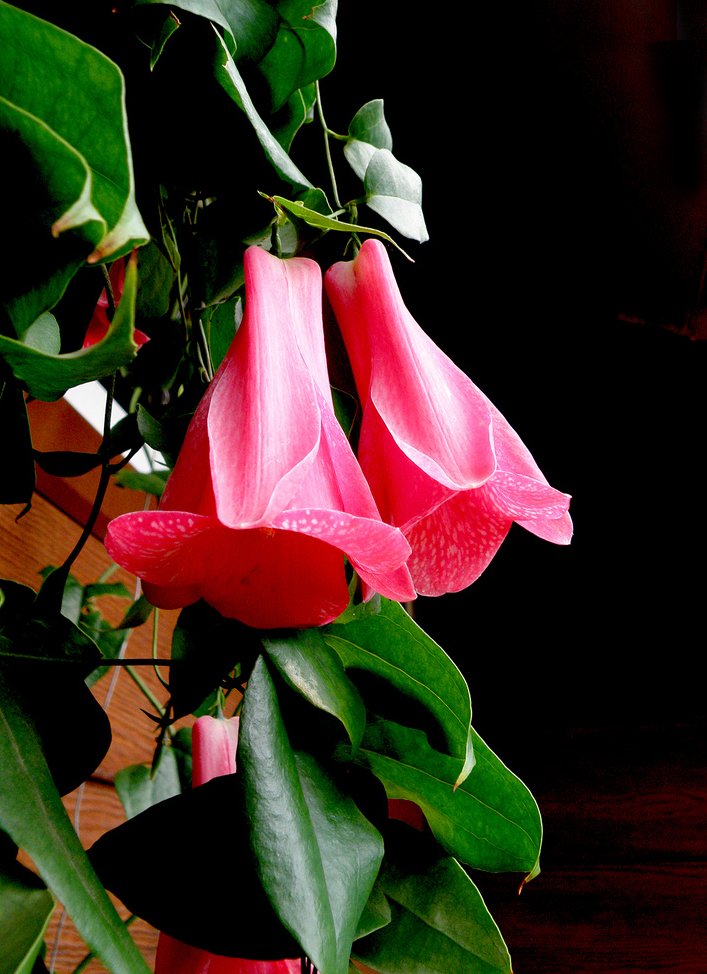
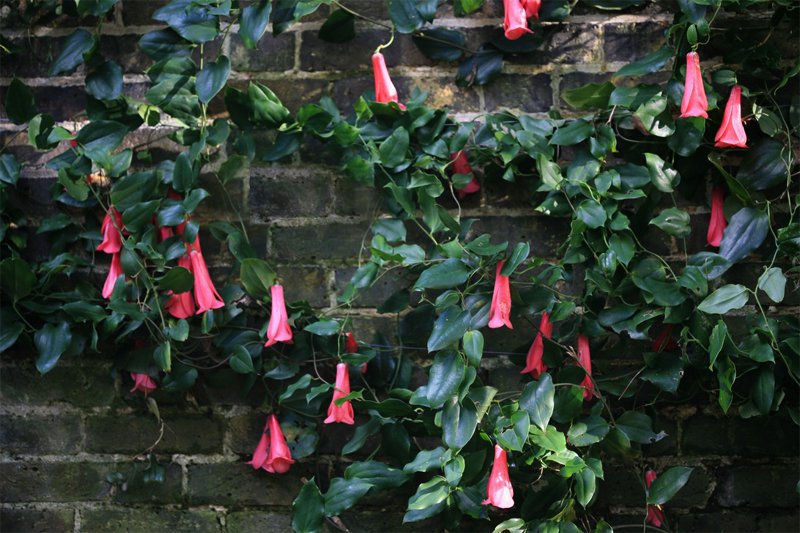 Lapageria rosea, commonly called the Chilean bell flower or copihue, is a large flowering vine native to the rainforest of South America. Perhaps the most desirable of all cultivated vines, this impressive and “exotic” plant is the national flower of Chile, where it is known as “Copihue”.
The name Lapageria was given in honor of Emperess Joséphine Tassher de la Pagérie, Napoleon Bonaparte’s first wife.
In the wild Lapageria rosea is found only in a narrow patch of rainforest between the Pacific Ocean and the Andes Mountain Rage on the west coast of Chile. As the sole species in its genus, this healthy vine has beautiful bell shaped flowers of up to 4 inches hanging from the upper area of the leaf axils. The six petal flower flares out into a large bell shape with the three on the exterior smaller in size and the inner three a large size. The standard color is rose crimson but the colors of the cultivars offer a myriad palette including blush, red, white, pink and are mottled or laced. There is a waxy cuticle on the surface of the flowers in different levels of thickness. The alternating leaves on the vines are oval and have a high gloss. Needs frost protection.
Thursday
"Black" Tomatoes
 The latest trend in vegetables are very high in anti-oxidants dark and purple or so called "Black" vegetables.
The dark pigments responsible for the purplish
tones are called anthocyanins, a type of phytonutrient, or plant
compound, hailed for its potential disease-fighting benefits. Studies
suggest anthocyanins may help reduce the risk of heart disease, diabetes
and certain types of cancer. Some evidence indicates these purple
pigments may protect our brain as we age.
 Being the darkest of all black tomato's, Indigo
Rose (derived from P20 line) has beautiful eye-catching hues of deep
purple where sunshine hits to red/orange where a leaf or stem shields an
area from the sun.
Being the darkest of all black tomato's, Indigo
Rose (derived from P20 line) has beautiful eye-catching hues of deep
purple where sunshine hits to red/orange where a leaf or stem shields an
area from the sun. The saladette sized fruits are excellent in salads or snacking. Fruit is from tennis ball down to ping pong ball size, has a nice fruity flavor and is quite variable. When sliced it looks just like a plum with its deep red flesh.
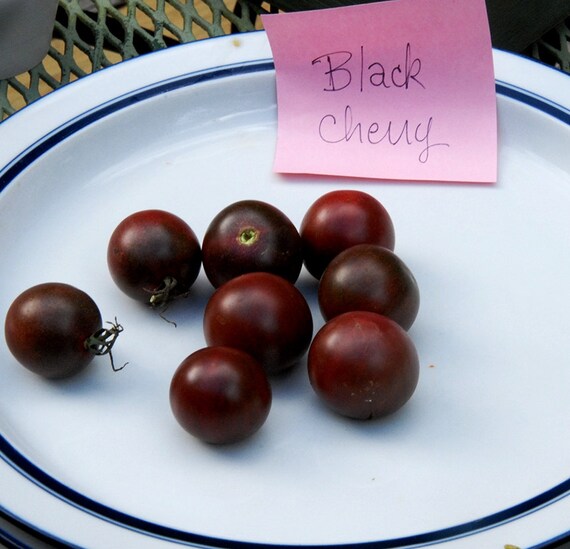
Difficult to find, black skinned heritage/heirloom cherry tomato.
Delicious! The one-word description I use to describe the
Black Cherry Tomato. Full of rich, sweet flavor for which black tomatoes
are known, with the convenient size of the cherry tomato. Fruits are
about 1 ½" in diameter, perfect round true cherry tomato shape, and deep
red-black in color with tender skins and medium-thick walls. Large,
vigorous, indeterminate 4-8' plants set forth a bountiful harvest of
these unique gems. Great snack right off the vine, delicious in salads,
pasta dishes, or roasted, can be dried, canned or frozen also.
.
Tuesday
Tip: Propagation and Germination Methods - Smoke and Fire

Smoke Infusion for Seed Germination in Fire-adapted Species
Smoke: Smoke treatment often helps germination of plants from fire-prone environments, particularly Mediterranean-climate plants such as many species from California, Chile, Australia, South Africa, and the Mediterranean region. Prepare a dilute smoke solution by adding one part commercial smoke flavoring to nine parts water. Either soak the seeds in this solution overnight (or until they swell), or water the pot or flat once with this solution. Look for the "all natural" type that lists only water and natural smoke concentrate as ingredients. Smoke treatment is still experimental, and you may have to try different dilutions.
Fire: Sow in a flat or pot and cover with several inches of pine needles or heavy straw. Burn this and leave the ash and charcoal in place, and water the flat as usual.
Here is very informative link from the University of Washington, on how exactly that works:
- Explained: Smoke Infusion for Seed Germination in Fire-adapted Species
- Ready to go Smoked Vermiculite: Found here
Wednesday
A Cucumber Tree!!!
 Not really, it's actually a fruit! This is going to be my little project tree for this year...
.
 Bilimbi (Averrhoa bilimbi) is a fruit-bearing tree in family Oxalidaceae, natives to the Moluccas, Indonesia. Also known as Cucumber Tree, Kamias or Tree Sorrel, it is commonly cultivated or found semi-wild in Southeast Asian countries. Averrhoa bilimbi is also known as cucumber tree and tree sorrel. It should not be confused with carambola or starfruit, which bears the same common name.
 The bilimbi tree is a long-lived tropical tree with a short trunk and multiple upright branches.
The fruit is too sour to be eaten raw and are used for beverages and preserves. The juice, with its oxalic acid content, is useful for bleaching stains from the hands and rust from white cloth, and also removing tarnish from brass.
Bilimbi grows best in full sun, rich, moist and well-drained soil. Propagation is by seeds.
"Magnificent" Giant Elecampane
Who knew there was a "Magnificent" Elecampane. Beautiful!
 Often known as Fleabane or Elecampane, the Inula magnifica makes a very large, imposing plant. The lower leaves can be almost 3 Ft long and make a feature on their own before the plant comes into flower. Then, in late summer, the plant is topped with masses of large, bright, golden spidery flowers each an impressive 6 inches across. Plant it as a specimen behind a pond where both foliage and flowers can be seen, or grow behind much shorter, moisture-loving plants in the center of a damp border.
Sunday
Petite Brazilian Sweet Pimento Pepper
 Look what we have here. Mini Pimentos!, these are going to be used for festive garnishes. The red color suits everything from Valentines to Christmas to New Years. I am so excited to get my hands on these Brazilian imported pepper seeds. Already started in little trays, sitting on a heat mat, my "Little Beaks", or "Little Kiss" pepper....yay!
 From the Brazilian state of Minas Gerais, Pimenta De Bico peppers are mildly hot, small, round and either a brilliant scarlet-red or sunshine-yellow, with a small beak-shaped protuberance hanging from the end. The plant makes a beautiful ornamental plant, and many of these plants grace Brazilian gardens and yards.
The incredible rich flavorful small of these chilies are perfect served as a garnish or as an appetizer with drinks or can be used to perk up almost any soup, stew or braised dish.
Wednesday
Purple Bell Vine!!
I am ready for the next adventure (...as well as spring). This time Rhodochiton atrosanguineum. And since it flowers the first year from seeds, I don't have to be patient :)


Native of woodland in Mexico, this attractive plant scrambles through the undergrowth and produces dark purple tubular flowers within a long lasting, papery calyx. The angular heart-shaped leaves are bright green and show off the unusual flowers to good effect. The flowers have an exaggerated bell-shaped calyx in a rich pink to fuchsia color. The flower is a narrow dark purple to almost black tube that hangs like the clapper of the bell.
Flowers the first year from seed. Sow early in spring to flower June to frost, or grow as a perennial in the greenhouse.
A delicate but fast growing tropical vine, which works well as an annual flower in hanging baskets and containers if given something to climb up, as the vines twine freely.
Flowers the first year from seed. Sow early in spring to flower June to frost, or grow as a perennial in the greenhouse.
A delicate but fast growing tropical vine, which works well as an annual flower in hanging baskets and containers if given something to climb up, as the vines twine freely.
Thursday
Pitaya - Dragon Fruit

I've recently acquired a 10 inch cutting that already developed a small offshoot. The seeds also germinated nicely. This is exiting, I just hope it grows as fast as they say!
Pitaya Hylocereus undatus, also referred to as Dragon Fruit, this is one of the first known species of Hylocereus. Native to Jamaica and Cuba. It grows in thickets, on rocks, or in old large trees. Pitayas are tropical plants and are grown from 0 and 1800 meters of altitude.

The Pitaya has an ovoid shape, and a thick yellow skin with excrescences and bulges that end with spine. inside there's a great mass of dense translucent white flesh that contains a multitude of small edible black seeds that can be scooped out in neat easy spoonfuls giving off a pleasant fruity smell.
The flavor is a little like a melon, with a multitude of crunchy seeds, which don't get in the way or alter the taste but do have a tendency to explode nicely when chewed.
At times they are available in the local grocery stores but are incredibly expensive. $6 for ONE!
Pitayas are also referred to as fruit of the shipwrecked man of the desert because of its refreshing properties. It is preferable to consume after keeping it in the fridge as that permits the flavors to heighten resulting in an even more refreshing character. To eat Pitayas cut them in half and eat the flesh with a spoon. They can also be made into juice and enjoyed as a cool drink. A syrup made of the whole fruit is used to color pastries and candy.
Fresh Seeds available here
Subscribe to:
Posts (Atom)


