Showing posts with label tropical tree. Show all posts

Wednesday

Pendulous Tropical Conifer Podocarpus

Podocarpus henkelii (Henkel's yellowwood) is a South African species of conifer in the Podocarpaceae family. It is grown as an ornamental specimen in gardens for its strikingly neat, attractive form and its elegant, drooping foliage. It is a protected tree in South Africa and officially South Africa's national tree.
An attractive ornamental tree, this is one of the most recognizable of the yellowwoods. It can easily be distinguished from its
close relatives by its long, slender, 7" drooping leaves. It has a straight, well-formed trunk and naturally assumes a pyramid-shape as it grows, eventually becoming very tall. It is highly recommended in the exterior landscape yet may become a stunning indoor specimen when kept pruned to size. 

 
It is fairly easy to cultivate, tough once established, and incredibly long-lived. It can also be pruned if necessary, to change its shape. However, although it is mildly frost and drought resistant, it is healthiest (and grows fastest) when planted in deep, moist soils. Zones 9-11. Bonsai suitable.
Seeds should be planted promptly in a moist, semi-shade position. The fleshy fruit that surrounds the seed must be removed as this inhibits germination. 

 
Other Names: African conifer, Henkel-se-Geelhout, Umsonti  


     - Plant Source Link
     - Seed Source Link


.

Digg this

Thursday

Elephant Ear Roxburgh's Fig

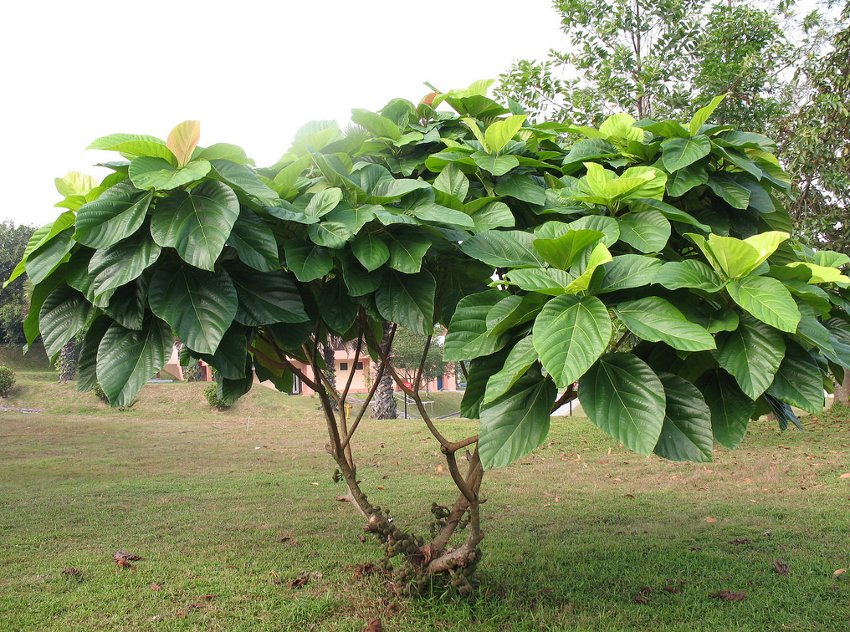
The Elephant Ear Fig tree is an impressive Fig species and it makes a great indoor plant for large rooms. Roxburgh's fig is native to India, Nepal, China, and Southeast Asia. 

This is a evergreen to semi-deciduous, spreading, large shrub or small tree reaching 15’ feet tall and as wide.
Ficus auriculata is the Fig tree with the largest leaves in the rain forests of the Chinese Yunnan province. 


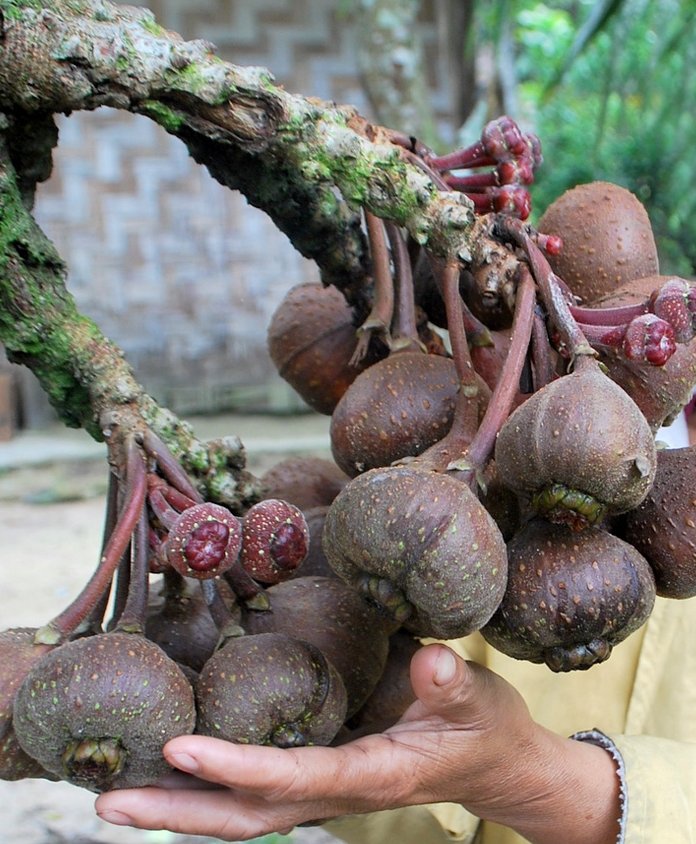
The young evergreen leaves are starting intensely red, and turn the greenest when reaching their ultimate size of up to 20” inches length. It can also easily be trimmed and the plant reacts with even more shoots and leaves on a thicker stem. The new growth is a deep red. Figs form in clusters on the trunk and larger branches, are green and red on the inside. 

The whole fruit tastes fairly sweet. It is full of an attractive jelly-like substance, which is much sweeter than the pulp. The absence of acidity, however, makes it slightly flat in taste. The overall fruit quality is good and is used to make jams, juices and curries. Zone 9+


Seeds....

Digg this

Wednesday

A Cucumber Tree!!!

Not really, it's actually a fruit! This is going to be my little project tree for this year...
 .
Bilimbi (Averrhoa bilimbi) is a fruit-bearing tree in family Oxalidaceae, natives to the Moluccas, Indonesia. Also known as Cucumber Tree, Kamias or Tree Sorrel, it is commonly cultivated or found semi-wild in Southeast Asian countries. Averrhoa bilimbi is also known as cucumber tree and tree sorrel. It should not be confused with carambola or starfruit, which bears the same common name.

  The bilimbi tree is a long-lived tropical tree with a short trunk and multiple upright branches.
  The fruit is too sour to be eaten raw and are used for beverages and preserves. The juice, with its oxalic acid content, is useful for bleaching stains from the hands and rust from white cloth, and also removing tarnish from brass.

Bilimbi grows best in full sun, rich, moist and well-drained soil. Propagation is by seeds.

Digg this