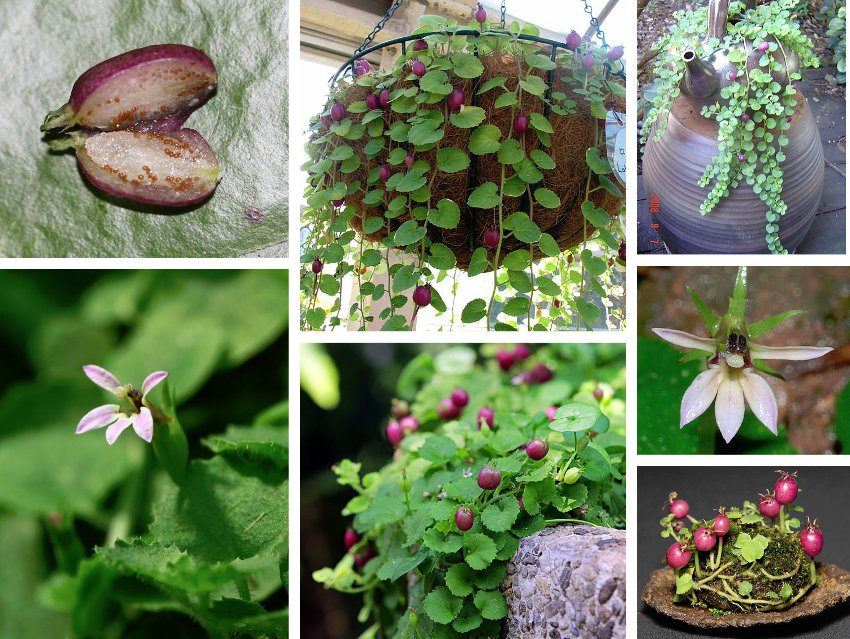
 The Star Creeper Lobelia nummularia is a herbaceous
perennial ground-cover, native to Asia, Australia and New Zealand.
The Star Creeper Lobelia nummularia is a herbaceous
perennial ground-cover, native to Asia, Australia and New Zealand.
Demure, white to pale purple flowers with pointed lips bloom in June and July
on this small trailing herb. Large, purple-red berries follow that stand up
curiously and ornamental on delicate vines. Small, toothed, and rounded light
green leaves line the trailing branches and cascade if given a chance. Growing
3-4" tall in light shade and moist conditions.
The relatively large purple fruits are very
ornamental and fruits and young shoots were wild collected, eaten cooked by
local people. Has medicinal properties. Hardy to 15F. Rare, unusual,
different.
Seed and Plant Sources:
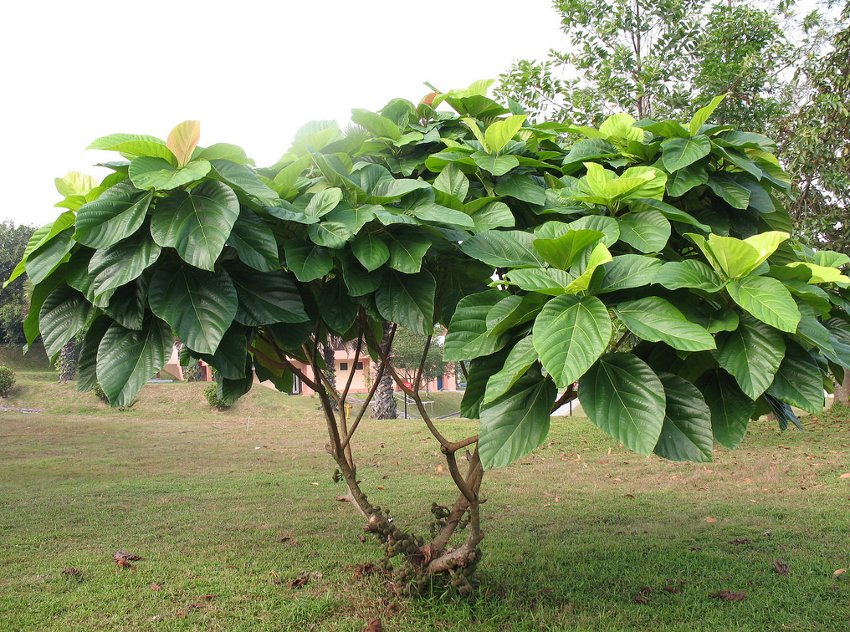
The Elephant Ear Fig tree is an impressive Fig
species and it makes a great indoor plant for large rooms. Roxburgh's
fig is native to India, Nepal, China, and Southeast Asia.
This is a
evergreen to semi-deciduous, spreading, large shrub or small tree
reaching 15’ feet tall and as wide.
Ficus auriculata is the Fig tree with the largest leaves in the rain
forests of the Chinese Yunnan province.
 The young evergreen leaves are
starting intensely red, and turn the greenest when reaching their
ultimate size of up to 20” inches length. It can also easily be trimmed
and the plant reacts with even more shoots and leaves on a thicker stem.
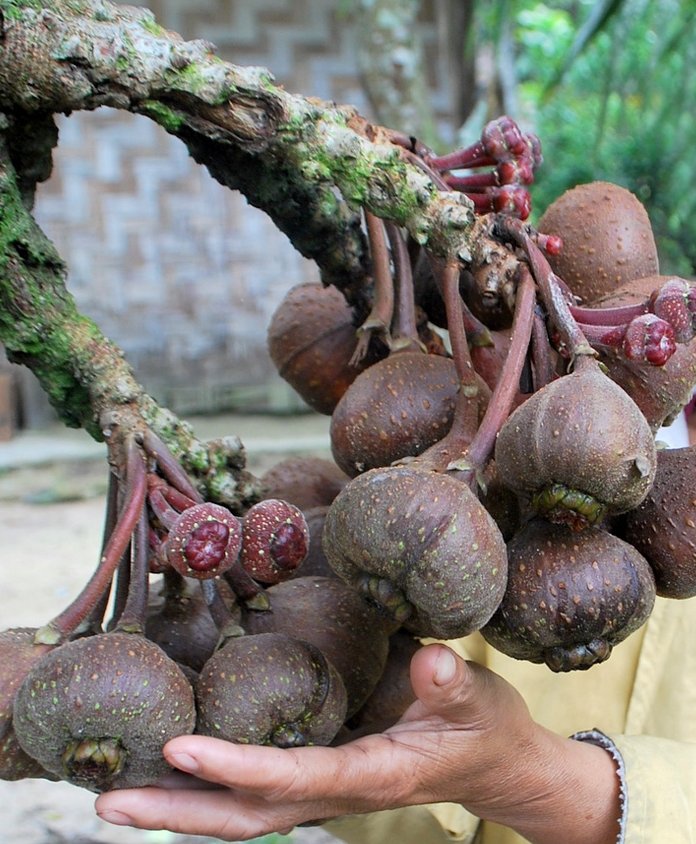
The new growth is a deep red. Figs form in clusters on the trunk and
larger branches, are green and red on the inside.
The young evergreen leaves are
starting intensely red, and turn the greenest when reaching their
ultimate size of up to 20” inches length. It can also easily be trimmed
and the plant reacts with even more shoots and leaves on a thicker stem.
The new growth is a deep red. Figs form in clusters on the trunk and
larger branches, are green and red on the inside.
The whole fruit tastes fairly sweet. It is full of an attractive
jelly-like substance, which is much sweeter than the pulp. The absence
of acidity, however, makes it slightly flat in taste. The overall fruit
quality is good and is used to make jams, juices and curries. Zone 9+
Seeds....

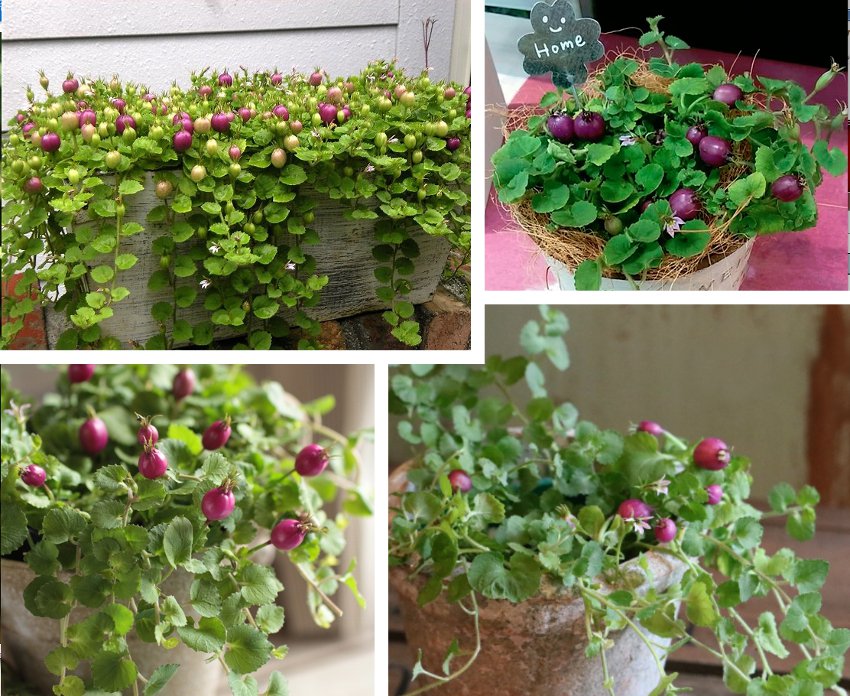
A wild and very unusual evergreen climbing shrub. Also known as climbing
blueberry, Cherry Berry or Climbing Appleberry, Billardiera longiflora,
it was described by French botanist Jacques Labillardière in 1805.
It is
a small Australian vine found in cool, moist forests from southern New
South Wales to Tasmania, where it is native. Deliciously scented, small
bell shaped green yellow flowers are sometimes purple tinged and
produced in summer. Electric purple blue, edible fruits follow in the
autumn and winter.
Happy in borders and containers, can be grown on a trellis or over
shrubs where the woody stems will twine and climb. Prefers well-drained
soil in partly shaded sheltered site. Height 6Ft. Hardy perennial.
Seeds found here
.