Showing posts with label heirloom. Show all posts

Tuesday

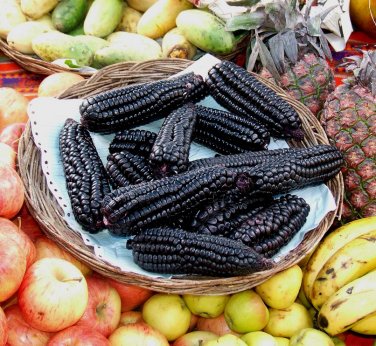
Black Heirloom Juicing Corn from Peru - Morado Corn

This is an absolutely beautiful dark dark purple corn. 

Also known as Kculli this ancient type of corn is particularly known in Peru and parts of South America and one of the oldest corn in the world, and a staple food of many societies since prehistoric times. Purple Corn bears well-sized ears with large kernels that ripen to a deep purple-black color. 
 
People of the Andes make a refreshing drink sweetened with fruit, sugar or honey from the purple corn called "chicha morada" which is now recognized as a nutritive powerhouse due to its phenolic and anthocyanins content. The Anthocyanins are a type of complex flavonoid that produce the blue, purple or red colors of the corn. Phenolics are known to have many bioactive and functional properties. Purple Corn has higher C3G antioxidant capacity and antiradical kinetics than blueberries.
 

Also highly desirable for corn meal and corn pudding as well as a natural fabric and hair dye and cosmetics.  Start indoors as this corn requires a long growing season 100-120 days.  

US Source Available Seeds

Digg this

Wednesday

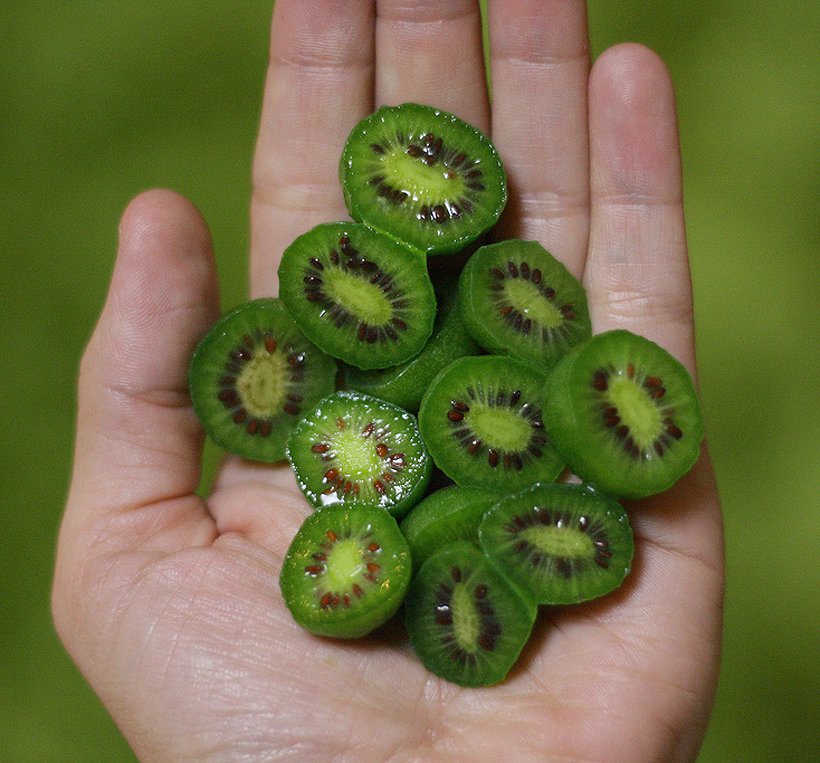
Mini Fruit Kiwi Berry Yum!!!

The self-pollinating Actinidia arguta is a heirloom perennial vine native to Japan, Korea, Northern China, and Russian Siberia. The fruit are referred to as Hardy kiwifruit, kiwi berry, arctic kiwi, baby kiwi, dessert kiwi, grape kiwi, northern kiwi, or cocktail kiwi and are edible. Berry or grape-sized fruit similar to kiwifruit in taste and appearance, but are green with smooth skin. Often sweeter than the kiwifruit, hardy kiwifruit can be eaten whole and need not be peeled.

The fast-growing, climbing vine is very hardy (hence the name hardy kiwi), and is capable of surviving slow temperature drops to -30°F, although young shoots can be vulnerable to frost in the spring. The vines need a frost-free growing season of about 150 days, but are not damaged by late freezes, provided that temperature changes are sufficiently gradual to allow plants to acclimate. Indeed, a period of winter chill is necessary for successful cultivation. However, rapid freezes will kill off buds and split vines. The vines can also be grown in low-chill areas. Seed available here.

The vines grow extremely quickly and require a strong trellis for support.

Digg this