Friday

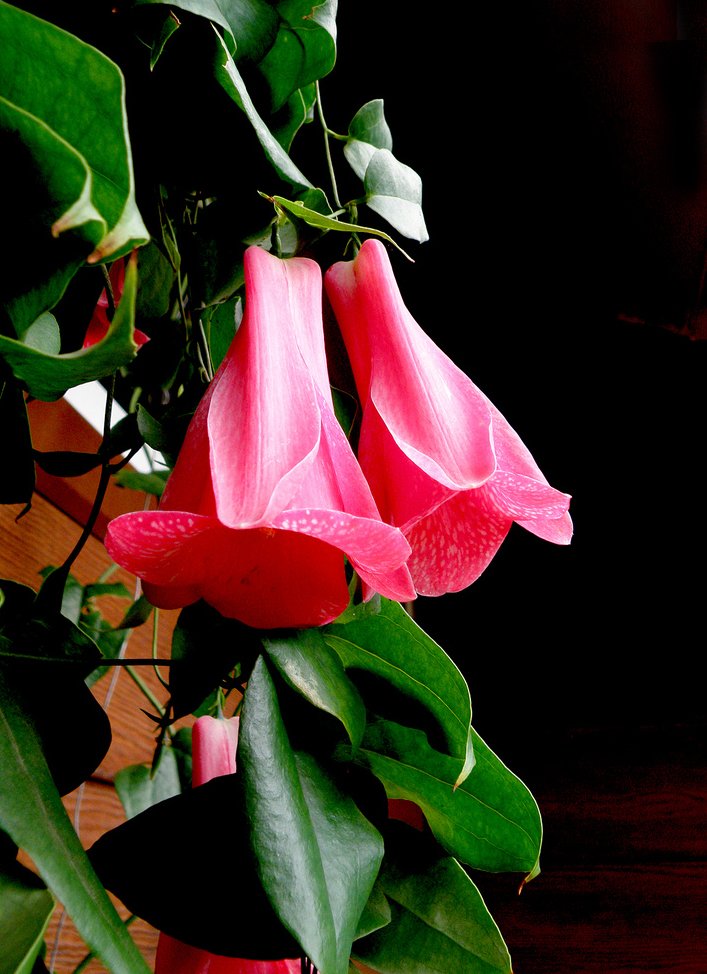
Chilean Bellflower Lapageria rosea Copihue

Off we go planting another "challenging" seed. The hugely sought after Chilean Bellflower.
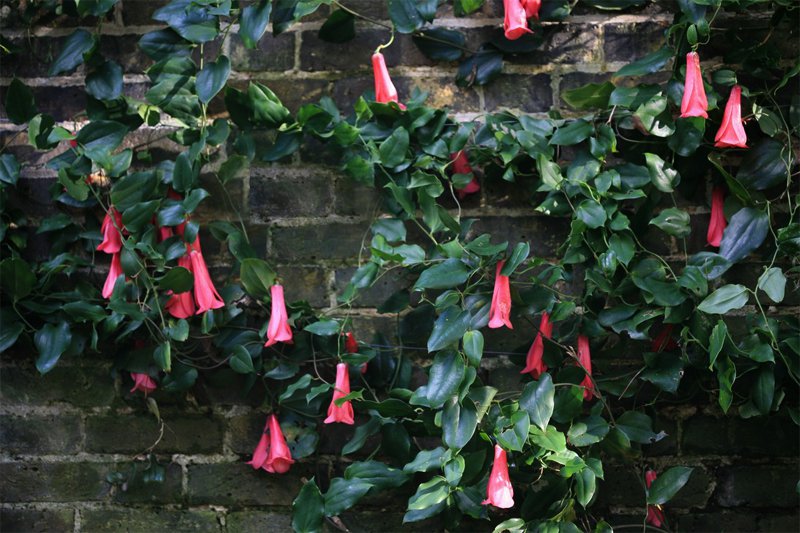

Lapageria rosea, commonly called the Chilean bell flower or copihue, is a large flowering vine native to the rainforest of South America. Perhaps the most desirable of all cultivated vines, this impressive and “exotic” plant is the national flower of Chile, where it is known as “Copihue”.
The name Lapageria was given in honor of Emperess Joséphine Tassher de la Pagérie, Napoleon Bonaparte’s first wife.

In the wild Lapageria rosea is found only in a narrow patch of rainforest between the Pacific Ocean and the Andes Mountain Rage on the west coast of Chile. As the sole species in its genus, this healthy vine has beautiful bell shaped flowers of up to 4 inches hanging from the upper area of the leaf axils. The six petal flower flares out into a large bell shape with the three on the exterior smaller in size and the inner three a large size. The standard color is rose crimson but the colors of the cultivars offer a myriad palette including blush, red, white, pink and are mottled or laced. There is a waxy cuticle on the surface of the flowers in different levels of thickness. The alternating leaves on the vines are oval and have a high gloss. Needs frost protection.


Digg this

Thursday

"Black" Tomatoes

The latest trend in vegetables are very high in anti-oxidants dark and purple or so called "Black" vegetables. 

The dark pigments responsible for the purplish tones are called anthocyanins, a type of phytonutrient, or plant compound, hailed for its potential disease-fighting benefits. Studies suggest anthocyanins may help reduce the risk of heart disease, diabetes and certain types of cancer. Some evidence indicates these purple pigments may protect our brain as we age.

Being the darkest of all black tomato's, Indigo Rose (derived from P20 line) has beautiful eye-catching hues of deep purple where sunshine hits to red/orange where a leaf or stem shields an area from the sun.
The saladette sized fruits are excellent in salads or snacking. Fruit is from tennis ball down to ping pong ball size, has a nice fruity flavor and is quite variable. When sliced it looks just like a plum with its deep red flesh.
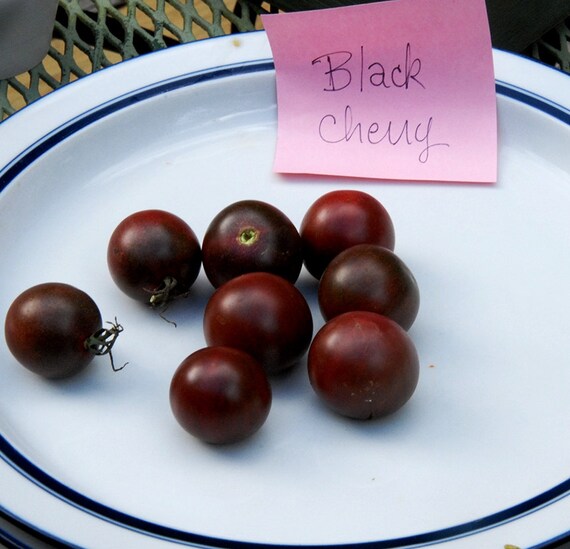
Difficult to find, black skinned heritage/heirloom cherry tomato.
 
Delicious! The one-word description I use to describe the Black Cherry Tomato. Full of rich, sweet flavor for which black tomatoes are known, with the convenient size of the cherry tomato. Fruits are about 1 ½" in diameter, perfect round true cherry tomato shape, and deep red-black in color with tender skins and medium-thick walls. Large, vigorous, indeterminate 4-8' plants set forth a bountiful harvest of these unique gems. Great snack right off the vine, delicious in salads, pasta dishes, or roasted, can be dried, canned or frozen also.


You can find these type of seeds here: Unusual Heirloom Tomatoes

.

Digg this

Tuesday

Tip: Propagation and Germination Methods - Smoke and Fire

Smoke Infusion for Seed Germination in Fire-adapted Species

Smoke: Smoke treatment often helps germination of plants from fire-prone environments, particularly Mediterranean-climate plants such as many species from California, Chile, Australia, South Africa, and the Mediterranean region. Prepare a dilute smoke solution by adding one part commercial smoke flavoring to nine parts water. Either soak the seeds in this solution overnight (or until they swell), or water the pot or flat once with this solution. Look for the "all natural" type that lists only water and natural smoke concentrate as ingredients. Smoke treatment is still experimental, and you may have to try different dilutions.

Fire: Sow in a flat or pot and cover with several inches of pine needles or heavy straw. Burn this and leave the ash and charcoal in place, and water the flat as usual.


Here is very informative link from the University of Washington, on how exactly that works:

Digg this

Wednesday

A Cucumber Tree!!!

Not really, it's actually a fruit! This is going to be my little project tree for this year...
 .
Bilimbi (Averrhoa bilimbi) is a fruit-bearing tree in family Oxalidaceae, natives to the Moluccas, Indonesia. Also known as Cucumber Tree, Kamias or Tree Sorrel, it is commonly cultivated or found semi-wild in Southeast Asian countries. Averrhoa bilimbi is also known as cucumber tree and tree sorrel. It should not be confused with carambola or starfruit, which bears the same common name.

  The bilimbi tree is a long-lived tropical tree with a short trunk and multiple upright branches.
  The fruit is too sour to be eaten raw and are used for beverages and preserves. The juice, with its oxalic acid content, is useful for bleaching stains from the hands and rust from white cloth, and also removing tarnish from brass.

Bilimbi grows best in full sun, rich, moist and well-drained soil. Propagation is by seeds.

Digg this

"Magnificent" Giant Elecampane

Who knew there was a "Magnificent" Elecampane. Beautiful!


Often known as Fleabane or Elecampane, the Inula magnifica makes a very large, imposing plant. The lower leaves can be almost 3 Ft  long and make a feature on their own before the plant comes into flower. Then, in late summer, the plant is topped with masses of large, bright, golden spidery flowers each an impressive 6 inches across. Plant it as a specimen behind a pond where both foliage and flowers can be seen, or grow behind much shorter, moisture-loving plants in the center of a damp border.

Digg this

Sunday

Petite Brazilian Sweet Pimento Pepper

Look what we have here. Mini Pimentos!, these are going to be used for festive garnishes. The red color suits everything from Valentines to Christmas to New Years. I am so excited to get my hands on these Brazilian imported pepper seeds. Already started in little trays, sitting on a heat mat, my "Little Beaks", or "Little Kiss" pepper....yay!


From the Brazilian state of Minas Gerais, Pimenta De Bico peppers are mildly hot, small, round and either a brilliant scarlet-red or sunshine-yellow, with a small beak-shaped protuberance hanging from the end. The plant makes a beautiful ornamental plant, and many of these plants grace Brazilian gardens and yards.

The incredible rich flavorful small of these chilies are perfect served as a garnish or as an appetizer with drinks or can be used to perk up almost any soup, stew or braised dish.

Digg this

Wednesday

Purple Bell Vine!!

I am ready for the next adventure (...as well as spring). This time Rhodochiton atrosanguineum. And since it flowers the first year from seeds, I don't have to be patient :)


 Native of woodland in Mexico, this attractive plant scrambles through the undergrowth and produces dark purple tubular flowers within a long lasting, papery calyx. The angular heart-shaped leaves are bright green and show off the unusual flowers to good effect. The flowers have an exaggerated bell-shaped calyx in a rich pink to fuchsia color. The flower is a narrow dark purple to almost black tube that hangs like the clapper of the bell.

Flowers the first year from seed. Sow early in spring to flower June to frost, or grow as a perennial in the greenhouse.
A delicate but fast growing tropical vine, which works well as an annual flower in hanging baskets and containers if given something to climb up, as the vines twine freely.

Digg this

Thursday

Pitaya - Dragon Fruit


I've recently acquired a 10 inch cutting that already developed a small offshoot. The seeds also germinated nicely. This is exiting, I just hope it grows as fast as they say!
Pitaya Hylocereus undatus, also referred to as Dragon Fruit, this is one of the first known species of Hylocereus. Native to Jamaica and Cuba. It grows in thickets, on rocks, or in old large trees. Pitayas are tropical plants and are grown from 0 and 1800 meters of altitude.

The Pitaya has an ovoid shape, and a thick yellow skin with excrescences and bulges that end with spine. inside there's a great mass of dense translucent white flesh that contains a multitude of small edible black seeds that can be scooped out in neat easy spoonfuls giving off a pleasant fruity smell.

The flavor is a little like a melon, with a multitude of crunchy seeds, which don't get in the way or alter the taste but do have a tendency to explode nicely when chewed.
At times they are available in the local grocery stores but are incredibly expensive. $6 for ONE!

Pitayas are also referred to as fruit of the shipwrecked man of the desert because of its refreshing properties. It is preferable to consume after keeping it in the fridge as that permits the flavors to heighten resulting in an even more refreshing character. To eat Pitayas cut them in half and eat the flesh with a spoon. They can also be made into juice and enjoyed as a cool drink. A syrup made of the whole fruit is used to color pastries and candy.


Fresh Seeds available here

Digg this

Monkey's Hand or Devil's Tree Chiranthodendron pentadactylon

What a scary looking thing!

Chiranthodendron pentadactylon – Sterculiaceae (Malvaceae) - ‘Devil's Hand Tree,' 'Monkey's Hand Tree,' 'Mexican Hand Tree,' 'Árbol de la manita,' 'Flor de la manita,' 'Mano de león,' 'Palo de yaco,' 'Mano de mico,' 'Majagua,' 'Macpalxochicuahuitl' -

Once known from a single sacred specimen growing in the Valley of Toluca in México, it was revered by the Aztecs and used spiritually and medicinally. Similar to an American Gingko, this plant was later found growing wild in the mountains of the México-Guatemala border, but much of the mystique surrounding this plant remains. It's names, both common and latin, refer to the excerted stamens emerging from the flower like a clawed hand. Like its close relative, Fremontodendron, it is in the Chocolate family, and a cross between the two genera is also grown. Difficult-to-germinate seeds mean that this plant is still rare in cultivation, but there are many fine specimens dotted up and down California.


Devil's Hand Tree is a slow-growing tree that will eventually reach a rounded 50'-60', and has a very beautiful contorted branches. The wonderful large red flowers put on a great show and flower for a long season. On the ground you sometime find the 'hands' that have fallen out of the mature flowers- a strange sight indeed (pictured). A tree for full sun on the cost or part shade more inland, they are very drought tolerant once established, and can also tolerate brief dips below 20º F.


Occasionally available at: Rare Exotic Seeds US

Digg this

Sunday

Mediterranean Succulents

This stunning ground cover will grace my succulent patch in the spring. I am starting them from seed, so they will be ready for planting after the last frost (that is, if we get any)

Carpobrotus edulis is a perennial growing to 5 inches by 3 ft It is hardy to zone 8 and is frost tender. It is in flower from May to July, and the seeds ripen from Aug to September. The flowers are hermaphrodite (have both male and female organs) and are pollinated by Bees.
 

The plant prefers light (sandy) soils, requires well-drained soil and can grow in nutritionally poor soil.The plant prefers acid, neutral and basic (alkaline) soils. and can grow in saline soils.
 
It cannot grow in the shade.It requires dry or moist soil and can tolerate drought.The plant can tolerate maritime exposure.

Digg this

Tuesday

Brazilian Dutchman's Pipe Aristolochia gigantea

Oh wow! Is this one is Bizarre!

Also known as Giant Pelican Flower, Aristolochia gigantea is a robust, twisting climber that can grow around a sturdy arbor or a tree up to 30 feet tall or higher.

This vine has fleshy heart-shaped leaves and large flowers exceeding a foot long and at least 6 inches wide. The flower is astounding, impressive, strange and sinister at the same time. The mouth of the pipe-shaped flower expands to a huge size and is colored with a maroon and white netting effect. In the “mouth” there is a central yellow spot where an opening leads into a closed pouch. The back view of the flower superficially resembles a pair of lungs with a canal leading into a stomach-like pouch. The blossom is over 14 inches (36 cm) long.
These huge, lemony scented flowers bloom from summer until late winter and are a sight to behold

Aristolochia gigantea usually grows in tropical regions from Panama to Brazil but it is incredibly hardy, and is an evergreen that will not die off at the first sign of a frost.


Seeds found here: Aristolochia gigantea

Digg this

Thursday

Growing Your Own Pistachio Nuts Pistacia Vera

Pistachios are a great source of vitamins and minerals and are naturally cholesterol free. A serving of pistachios contains 170 calories and is a good source of many key nutrients containing over 10% of the Daily Value of fiber, protein, vitamin B-6, thiamin, phosphorus, magnesium, and copper.
In addition, scientific evidence is mounting to show that consuming nuts can play a role in managing your weight.

They aren't hard to grow and the seedlings potted up in a cute container will make a nice exotic Holiday Gifts for colleagues at the office.

Pistacio makes broad feathered, glossy, dark leaves and terminal clusters
of small flowers followed by red-skinned fruits on female plants.

The fruits contain the well-known Pistachio nut inside. The reddish, wrinkled fruits are borne in heavy clusters somewhat like grapes. Although known as a nut, the fruit of the pistachio is botanically a drupe, the edible portion of which is the seed. The oblong kernel is about 1 inch in length and 1/2 inch in diameter and protected by a thin, ivory-colored, bony shell. Normally the shells split longitudinally along their sutures when mature.
Pistacia vera develops strictly either male or female plants, thus several plants have to be grown together for pollination. An ornamental container plant suited for any well drained, rich soil in a sunny spot.

Pistachios should be planted in full sun. The size of the slow growing trees can be further controlled by pruning. When planting, avoid rough handling since the budded tops are easily broken away from the understock.
The trees do best on soils that are deep, friable and well drained but moisture retaining. It can, however, survive in poor, stony, calcareous, highly alkaline or slightly acid, or even saline soils. The root is deeply penetrating.

US Seed source

Digg this

Brodé Galeux d'Eysines Squash

Yikes!  Talk about an ugly pumpkin. Perfect for Halloween!

Brodé Galeux d'Eysines  is a French Heirloom Winter Squash, not really a pumpkin, however it can be carved like one. It is a hard to find Farmers Market Vegetable.

The silver sheened salmon-pink skin develops peanut like nodes as the sugar content builds in the ripening process. The more bumps, the greater the sugar content.

The bright orange flesh is nutty, sweet, firm, and without fibrous strings making it perfect for pies, steaming, baking, soups and more. Fruits grow to 10-20 lbs in size and keeps well.

Seeds found here

Digg this

Wednesday

Blushing Bride Flower!

I am ready to grow my first Serruria from seed. Fresh seeds arrived and off  I go mixing soil according to instructions. This time it's required to sterilize the soil. How can you sterilize soil - There is the microwave method or you can pour boiling water over it several times.

This gorgeous South African member of the Proteaceae family reputedly derived its common name of “blushing bride” around 100 years ago when young men wore the flowers in their button holes when out courting in South Africa, the natural habitat to this lovely flower. 


The rare Serruria florida is a highly desirable small shrub which grows a 4 ft high and wide. The foliage is feathery and hairy.

Because of this ability to trap any available moisture, Serrurias are very tolerant of dry soil conditions.

To grow Serruria successfully, their main requirements are freedom from all but light frosts,full sun and perfectly drained soil.

Blushing Bride flowers in Spring producing soft, papery white bracts or floral leaves, surrounding feathery tufts of white to pinkish flowers. The blooms are either a white/creamy color with a delicate blush of pink, or an all-over rose pink color. They are in high demand for floral work, especially wedding bouquets and normally command a high price.


Blushing Bride Seeds

Digg this

Tuesday

Aussie Waratah Telopea speciosissima

The seeds I just purchased will be my second batch. Waratah seeds are incredibly easy to germinate, with a 100% germination rate, however I had a problem with the seedlings damping off last time. No seedling survivors. 

Now that I've learned a bit more about the Waratah seedlings need a slow climate adjustments, I am giving this another try.  - I demand success!!! ;)

This got to be one the most beautiful flowering shrubs I've ever seen! 


.

Digg this

Nelumbo lutea American Lotus

Rediscovered uses for the water lily. Even if you don't have room for a pond, there IS room for a Pond


Lily Pond in a Vase! What an awesome concept for growing and display Water lilies in clear vases!

Nelumbo lutea (American Lotus) is and emergent aquatic plant with large 
 circular leaves. Leaves are connected to the petiole in the center of the circle with no apparent slits in the side (an easy way to distinguish them from other water lilies).


Flowers are born off the top and have numerous stamen around a central pistil. Flowers last for two days in which time they can be pollinated by insects. This species is almost extinct in the wild.

All parts of the Lotus has food and or medicinal properties and make a great gift!

Seeds are available here and are very easy to germinate. 

Digg this

Thursday

Nice! Blue Butterfly Vine

I have a new fascination with Vines patriculary red, black and blues.

Technically a tropical plant, the Blue Butterfly vine also easily grown annuals in more northern areas and will quickly bloom from seed in about 6-8 weeks

Produces a wonderful display of 2 inch vivid blue flowers from mid to late summer. Prefers full sun to light shade, are very drought tolerant and are well-adapted to a variety of soil types.

These will bloom all year long in frost free zones or inside as an exotic vining houseplant.

Ideal for covering trellis in a sheltered part of the garden, as a perennial in a conservatory or as a hanging plant, attracting many bees and butterflies.

Climber to 6-8ft. Zone 8+

Digg this

Sunday

Margarita Lemon and Lime Citrus Slice Earrings

I love this!!!!! It makes my mouth water. Super creative citrus earrings made from recycled plastics,


Digg this

Thursday

A Black Flowering Vine

Another unusual beauty.

Also known as  Black Coral or Tiger Snake Vine / Kennedia Nigricans

This is a beautiful flowering vine from Australia. It has very striking flowers due to the combination of colors. Deep maroon petals shade to almost pure black, with a striking contrast of a yellow lip. A short lived perennial, it is nonetheless easy from seed and will set a profusion of seed if allowed.

It will grow to be a scrambling climber with stems of up to 30 Ft. In the absence of any support the stems will scramble making a useful ground cover. It can also be used very effectively in hanging baskets. It produces a profusion of flowers all through the summer. Hardy to Zone 8/9 and tolerant of a wide range of growing conditions. It will withstand moderate frost.

Digg this

Monday

Portlandia Cubanola Domingensis - A Tree Lily !!!!

The spectacular Lily Tree, also known as Campanita Criolla, comes from the Dominican Republic and Cuba and is considered an extremely rare specimen plant, recommended for your green house, tropical sun room or outdoors zone 10+. It does not tolerate frost and does well in 1-5 gal containers.
Cubanola domingensis is an evergreen shrub, with shiny deep green leaves and approximate 10 inch long tubular, very fragrant, crème colored flowers with a slight green tint.
If planted outdoors, the plant needs lots of water during the summer months, and during winter, just enough water to keep the roots from drying out. This beauty needs well draining soil and does not tolerate "wet feet". 


It took me over 2 years to track that rare baby down and managed to get my hands on seeds!!! This got to be one of the hardest of plant seeds I've ever hunted for. 

Lets see if the sub-tropical climate will assist in germinating this new gem. X fingers.


Edit: Seeds germinated with a relatively high germination rate. They do however take a very long time, several months, so patience and keeping the environment free of mold is of the essence.
I soaked the seeds for a few days in warm water with a drop of 3% hydrogen peroxide. Then I placed the seeds in a coffee filter, folded it, sprayed it with a little water until moist and placed it in a zip lock bag on a seed warming mat so I could see whats going on. After a few months they started to sprout. When the seedlings were about 1/4 to 1/2" they were placed in lightweight seed starting mix in a warm location but without a heating mat so the babies wouldn't bake. So far so good! :)

Seed Source


Digg this

Tuesday

Sturts Desert Pea Swainsona formosa

Another unusual, it never ends!!!

Clianthus formosus or Swainsona formosa Native Australian wildflower.
Incredibly beautiful plant with scarlet and black flowers reminiscent of exotic birds. Does best in dry conditions.


With dazzling crimson and black flowers having the ' appearance of a lobster claw, Clianthus will happily create a dense carpet of glaucous, ferny foliage from which these exciting flowers will appear. Easily grown, and surviving the poorest of soils and the sunniest of positions, just like in its homeland of Australia.


Seeds available here

Optimum Germination Temperature: 65-70F. Sowing Depth: ¼in. Sowing Time: April to May. Best sown where it is to flower, it prefers a warm, sunny, sheltered spot and very deeply dug, dry, sandy soil. Before sowing, soak the seed for 24 hours, then sow ¼in deep and protect from excess wet by placing a cloche or sheet of glass on 4 bricks over the area.
Sow in place, resents transplanting. Excellent specimens can be grown as conservatory plants. Half-hardy annual, 6-12" tall.

Digg this

Thursday

Wolfberry or Goji Berry - Himalayan Superfood!

 My newest discovery is the Goji berry. Super easy to germinate from seeds!! I suggest getting already extracted and cleaned seeds, rather than the pod, unless you feel like spending hours picking out the micro tiny seeds, rinsing them and drying them.

I got mine here: Goji Berry Seeds

The Chinese revere Wolfberry as a national treasure among the most nutrient dense of the nation’s medicinal herbs. This reputation has stimulated scientific research about its potential health benefits and systematic cultivation.

The wise old Chinese healers used the fruit from the Wolfberry bush to strengthen the eyes, liver, kidneys, and build healthy blood, circulatory and immune systems. Wolfberries contain carotenoids, which, as we all know are potent antioxidants. One of its key constituents is lycium barbarum polysaccharide (LBP)...what does that do?

Well it will protect your body against cellular damage. It has been said that people who consumed them on a regular basis, lived very healthy lives for 100-plus years.

Gouqizi or gouqi, the Chinese Mandarin names for goji ("wolfberry", Lycium barbarum L.), is a red-orange berry of the Solanaceae nightshade family that includes tomato, eggplant, chili pepper and potato.

In vernacular, gouqi (Mandarin pronunciation "goo-chee"), has become “goji”. For at least 2000 years, Wolfberry has grown wild in China and used in common recipes and traditional Chinese medicine. Wolfberry derives its name from "wolf-peach" -- the tomato, its larger botanical cousin (Solanum lycopersicum), where "lyco" is Greek for wolf and "persicum" is peach.

Digg this

Friday

A Different Kind of Hawaiian Lei Flowers


Definitely in the Rare, Exotic and Unusual category Calotropis gigantea, Crown flower or Giant Milkweed are great additions to any tropical garden! According to the Hawaiian culture it is a symbol of royalty and is made in to stunning leis and worn and adored by the last queen of Hawaii named Queen Liliuokalani.

Calotropis gigantea (Crown flower) is a species of Calotropis native to Indonesia, Malaysia, Philippines, Thailand, Sri Lanka, India and China.


 The clusters of waxy flowers are white or lavender, and have a little "crown" in the center composed of five downward-pointing, twisted petals that resemble an elegant miniature royal crown. They are produced in bunches among the leaves, which are light green and fuzzy on both sides, growing on succulent milky stems. When fully grown, each small tree or large bush can support hundreds of Monarch butterflies as the adults sip nectar from the flowers and the caterpillars eat the leaves. Don't worry about the caterpillars, as the plant will quickly regrow whatever they eat and more, but do protect it from the cold. It is not frost-hardy at all and must be planted in a large pot and kept indoors during winter.
 

There is another variety,
Calotropis procera, with beautiful purple flowers


Digg this

Tuesday

Fresh Gourmet Asian Water Chestnuts! Yum!

Asian Water Chestnut Eleocharis dulcis

Off we go, starting our own water chestnuts again. In case you ever had them in stir fry, the fresh bulbs are 100 times better than the canned. Delicious. Plus, I know in what water they are growing  (clean water) ;)

Eleocharis dulcis is tropical Asian aquatic sedge having an edible corm and cylindrical leaves. The succulent corm of this plant ist used in Asian cooking. This is NOT to be confused with the aquatic invasive Asian water chestnut (Trapa natans)
Chinese water chestnuts (Eleocharis dulcis) and European water chestnuts (Trapa natans) are two unrelated water plants that carry the same name. The Chinese water chestnut resembles a small muddy tulip bulb and is sweet and crunchy; the European water chestnut resembles a tiny horned bull’s head and is quite starchy. Americans are most familiar with the Chinese water chestnut. Chinese water chestnuts grow underwater in mud, have brown or black scale-like leaves, and are round, though somewhat flattened. They are the roots of an aquatic plant that grows in freshwater ponds, marshes, lakes, and slow-moving rivers and streams in Japan, Taiwan, China, Thailand, and Australia. They are difficult to harvest, explaining their generally high price. Chinese water chestnuts have mildly sweet, crisp, white flesh and are excellent raw on skewers with dip/

The European water chestnut or water caltrop has seed capsules with four spikes and is named after the caltrop, a vicious medieval weapon with four iron points. This hard-shelled ebony black fruit has two prominent, down curved horns resembling a bull’s head and a woody, sculptured surface that looks like a face or a bat. It grows abundantly in Indonesia, Southeast Asia, southern China, Japan, Italy, and tropical America. Its Chinese name, ling ko, means “spiritual horn.”

Storage: Store water chestnuts, unwashed and unpeeled, in a loosely closed paper or plastic bag in the refrigerator crisper for up to 2 weeks. Keep water caltrops in a cool, dry place.

To Grow: Easy to grow in a tub filled with dirt about 4" high . Water to 2" above soil level. Consider appropriate spacing as each corm produces quickly about 8-10 new corms. The closer they sit the harder it is to separate them.

To Buy: 
  1. Tricker Aquatics: Water Chestnuts
  2. COTW Rare Seeds: Fresh Asian Water Chestnuts 

Digg this

Friday

It's Time for Some Color!!!


I just bought masses of seeds to get started on the spring. I am so ready!!!!!! Pink  is the first color of choice this time and off we go, planting our acquired seeds from the magnificent Pink Coral Vine

It's also called Queen's Wreath, Queen's Lace, Chain of Love, Chinese Love Vine

The Pink Coral Creeper is native to Tropical America. Not often seen, the rare coral creeper is a favorite for its showy flowers seen mostly in summer and fall. Makes a fabulous container plant in cooler areas.

Coral creeper climbs on tendrils and has interesting heart-shaped leaves. Plant in full sun in most any soil. Water to establish, prune to control. Best used to run up supports such as a tree or a trellis. According to the seller, it is a carefree plant to own.


Digg this

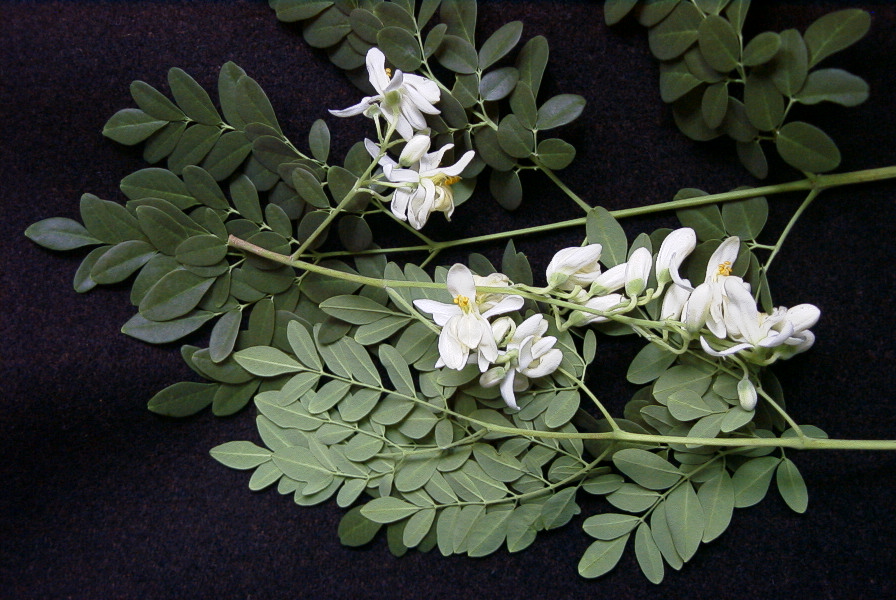
Moringa, Tree of Life

Also known as Moringa oliefera, Moringa pterygosperma, Drumstick tree, (Horse)radish tree, Mother’s best friend, West Indian ben, Árbol del ben, Morango, Suhanjna Moringa, is native to north India but is now found throughout the tropics. It grows fast and reaches up to 12m. The bark is gray and thick and looks like cork, peeling in patches. It looses its leaves from December to January and new growth starts in
February to March. Moringa produces cream colored flowers when it is 8 months old and the flowering season begins in January and continues through to March. The fruit ripens from April to June and the pods are triangular in cross section, 30 to 50cm long and contain oily, black, winged seeds.

Temperature
It will survive in a temperature range of 25ºC to 40ºC but has been known to tolerate temperatures of 48ºC and light frosts.

Soil
Moringa prefers neutral to slightly acidic soils and grows best in well-drained loam to clay-loam. It tolerates clay soils but does not grow well if waterlogged

This is a plant of wide and diverse uses.
· Human food
· Animal fodder
· Water purification
· Natural medicines
· Fertilizer
· Living fence
· Natural pesticide
· Domestic cleaning agent
· Fuel wood and other uses

Its leaves are said to contain 7 times the vitamin C of oranges, 4 times the calcium in milk, 4 times the vitamin A in carrots, 3 times the potassium in bananas, and 2 times the protein in milk.
Human food
All Moringa food products have a very high nutritional value. You can eat the
leaves, especially young shoots, young pods, flowers, roots, and in some
species even the bark. Leaves are low in fats and carbohydrates and rich in
minerals, iron and vitamin B.

Fresh leaves
Of all the products of the tree the leaves are used the most. They become
tougher as they get older so it is best to pick the growing tips and young
leaves. Remove the leaves from the woody stem, as this will not soften
during cooking. The leaves can be used in the same way as spinach. An
easy way of cooking them is to steam 2 cups of freshly picked leaves for a
few minutes in one cup of water, seasoned with an onion, butter and salt or
other seasonings according to taste.


Seeds Found here

Digg this

Phanera Fairy Vine Bauhinia corymbosa

A stunning and hard to find evergreen vine in sub-tropical conditions, that can be semi-deciduous in cooler climates with older leaves dropping in cold winters. The beautiful vine has very attractive and unusual foliage and orchid-like flowers with unique 2 lobed leaves.


The pale pink flowers with dark veining are abundant from spring to autumn and are complimented by the purple tinged new growth. It is perfect for covering a pergola, fence or over a tree and is spectacular as a ground cover especially when in flower.
 
Found here: Bauhinia corymbosa

Digg this

Tips for these hard to germinate seeds....

Starting seeds the traditional way usually includes a seed starting mix made up of equal parts of peat moss, vermiculite, and perlite. When mixed together with a little water, this mixture will hopefully support the growth of your new seeds. The risks are too much water, too little water and even seed rot if the soil is too wet. Here is how you can start to germinate seeds in more efficient manner.

Hydro Soil is the perfect medium to grow seeds, especially those difficult to start seedlings.
Biodegradable and non-toxic.

 
You will need:
  • Hydro Soil (-flavorless, dye free prepared gelatin works also)
  • Water Sterilized containers such as baby food jars or small yogurt containers
  • Sheet of clear plastic or piece of glass
  • Powdered cinnamon

Prepare dry hydro soil per instructions. Pour at least 2 inches of the mass into sterilized containers and push at least 3 seeds in each gelatin filled container.  Place your containers in a warm, sunny spot and cover with clear plastic or glass.

Be mindful of mold forming. To reduce the danger of mold, you can use boiling water to hydrate the dry soil crystals, but be sure to let it cool down before you plant any seeds.  If you see mold, just dust with a little powdered cinnamon to keep the mold in check.

Once your seedlings have sprouted and are about an inch or two tall, transplant them (with the hydro soil) into the seed starting mix.
It will continue to provide moisture for your seedlings as they grow and you have less risk of injuring your new seedlings.

You can also use regular baking gelatin instead of hydro soil, this works also.

Gelatin is made from animal bone and therefore has high level of nitrogen and other minerals.
It will continue to "feed" your seedlings as they grow and you have less risk of injuring your new seedlings.


Hydro Soil Source
.

Digg this